



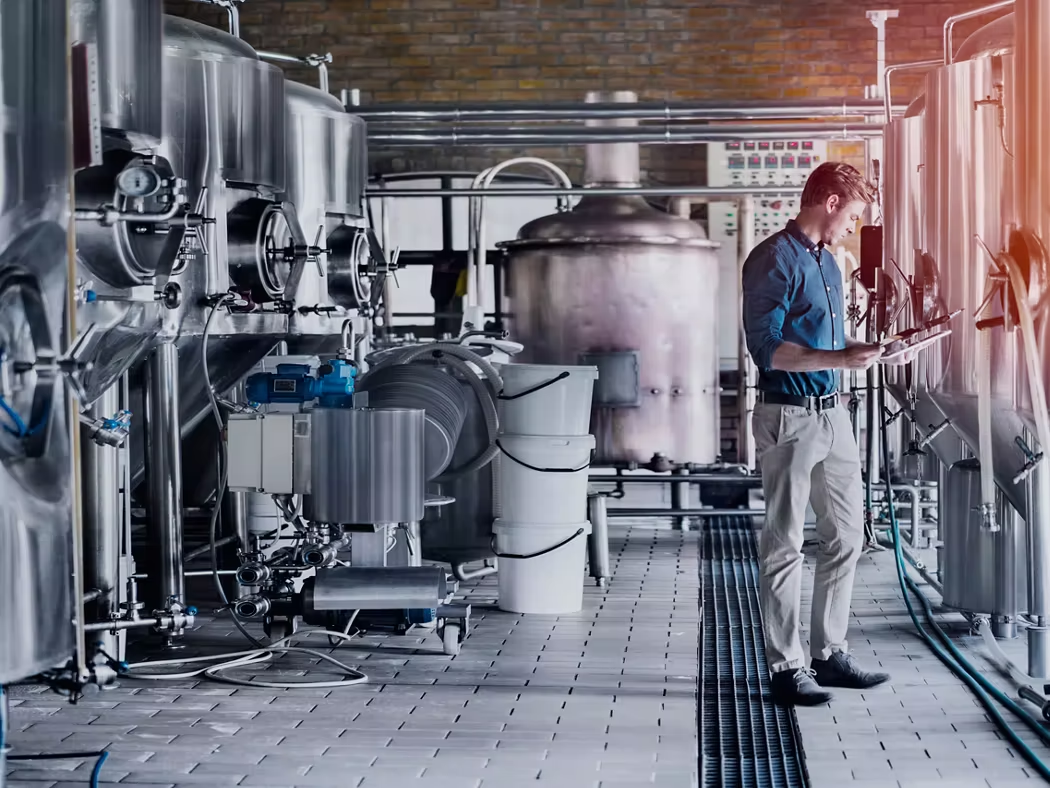
Businesses in the brewing industry are having to adapt to regulations and pressure to improve sustainability.
This goes for businesses brewing a small batch for local institutions or running large production lines.
The methods being leveraged make brewing more sustainable without compromising on the quality of the beer.
Join The European Business Briefing
New subscribers this quarter are entered into a draw to win a Rolex Submariner. Join 40,000+ founders, investors and executives who read EBM every day.
SubscribeAnd in fact, some of these eco-friendly tweaks can make beer more enjoyable.
How brewers are saving water
With beer consisting mostly of water, brewers are moving away from traditional brewing methods that utilise large amounts of water.
Traditionally it wasn’t uncommon to see seven litres used for every one litre of beer produced.
Steps to cut back include closed-loop water systems and water recycling technologies. Breweries are also reusing greywater for cleaning or irrigation.
Brewers moving to renewable energy
Breweries can make the switch to renewable energy with solar panels, wind turbines, and hydroelectric power
They are all viable options to power brewing without contributing to the climate crisis. Plus, it makes for improved credentials.
Energy Trust has guides for businesses looking to go green.
Sourcing local ingredients
If you’re shipping your hops and barley halfway across the world, then you’re adding some food miles to your beer.
Instead, brewers are sourcing their ingredients locally. Not only does this cut down on carbon emissions, but it also supports the local economy.
Local sourcing also means you can have better control over the quality of your ingredients.
The Soil Association is a great place to learn about the benefits of local and organic farming.
Find new life for beer-making waste
Breweries create significant amounts of waste that can be reused.
Spent grain contains lots of nutrients and can be used as animal feed, meaning it doesn’t have to go to a landfill.
There are plenty of waste management companies out there that are tailoring their services to brewers.
Similarly glass can be reused, so if any is smashed as part of the bottling process, a thorough cleaning, sorting and recycling will ensure that the materials haven’t gone to waste.
Improving sustainable packaging
Packaging is another factor that plays a significant role in the environmental impact of the brewing industry.
Traditionally, beer has been packaged in glass bottles or aluminium cans, which require substantial resources to produce and transport.
To combat this, breweries are exploring more sustainable packaging options. This can include already recycled glass, or recycled alloy.
This can be done by partnering with more sustainable fulfilment partners who will ensure that delivery packaging is also eco-friendly.
Other ways breweries are cutting carbon emissions
Carbon emissions can be cut by optimising delivery routes, switching to electric vehicles, and using fuel-efficient transport methods.
For larger reductions, some may want to look into carbon capture technology.
This captures the carbon dioxide produced during fermentation so that it doesn’t contribute to global warming.
From water conservation to waste reduction, sustainable beer brewing is achievable for breweries of all sizes.
Implementing these strategies will not only help you cut down on your environmental impact but also appeal to customers who are increasingly looking for eco-conscious brands.

