




























How curated platforms like CIFRA are redefining digital art beyond speculation.
The wave of NFT in 2020–2022 solved a problem, which was considered as crucial for digital art for a long time – ownership. Artists got the opportunity to sell verifiable originals online, and collectors got the opportunity to receive the detailed information about the artwork they buy – provenance in a native digital form. Yet visibility came at a cost and much of the attention around digital art was filtered through speculation, where rarity traits, floor prices, and rapid flipping often overshadowed artistic discourse and practice, making artists token issuers.
As the market cooled and trading volumes dropped, deeper structural gaps became more and more visible with time. Ownership alone was not capable of creating audiences, context, or meaningful cultural engagement. As a result, many NFT platforms began to operate primarily as transactional marketplaces, which are much more optimized for liquidity rather than long-term relationships and meaningful connection building between collector and artist.
Join The European Business Briefing
New subscribers this quarter are entered into a draw to win a Rolex Submariner. Join 40,000+ founders, investors and executives who read EBM every day.
SubscribeThe outcome revealed a central limitation of the NFT cycle: the audience behaved like traders, speculation succeeded in generating liquidity and visibility, but it did not build the structures necessary for long-term cultural engagement. As a result, once speculation declined, audience interest came to collapse, platforms lacked cultural value beyond financial activity.
From Marketplaces to Meaning: Post-NFT Platforms Rebuilding Digital Art Infrastructure
However, the post-NFT era has definitely changed the focus and moved conversation towards developing infrastructure as the foundation.
During the NFT era, ownership was the central value proposition: platforms – marketplaces, attention was captured by trading activity, and speculation functioned as the primary engine of visibility. In contrast, the post-NFT platforms started to make an emphasis on curation, narrative framing, and sustained visibility. These conditions contributed to the complete change of digital art representation, why it started to be experienced as culture, not just as an asset class.
This transition also redefined incentives. While platforms that valued cultural engagement and meaningful connection-building fostered deeper access, critical discourse, and creation of the dichotomy between artists and audiences, trading ecosystems rewarded only short-term market performance.
According to this model, the platform acts as an infrastructure for context and meaning instead of just a marketplace. Ownership still exists, but it is no longer the dominant narrative. What is appreciated most – how art is distributed, how it is framed, and how audiences are cultivated.
Case Study: CIFRA as a Post-Market Digital Art Platform
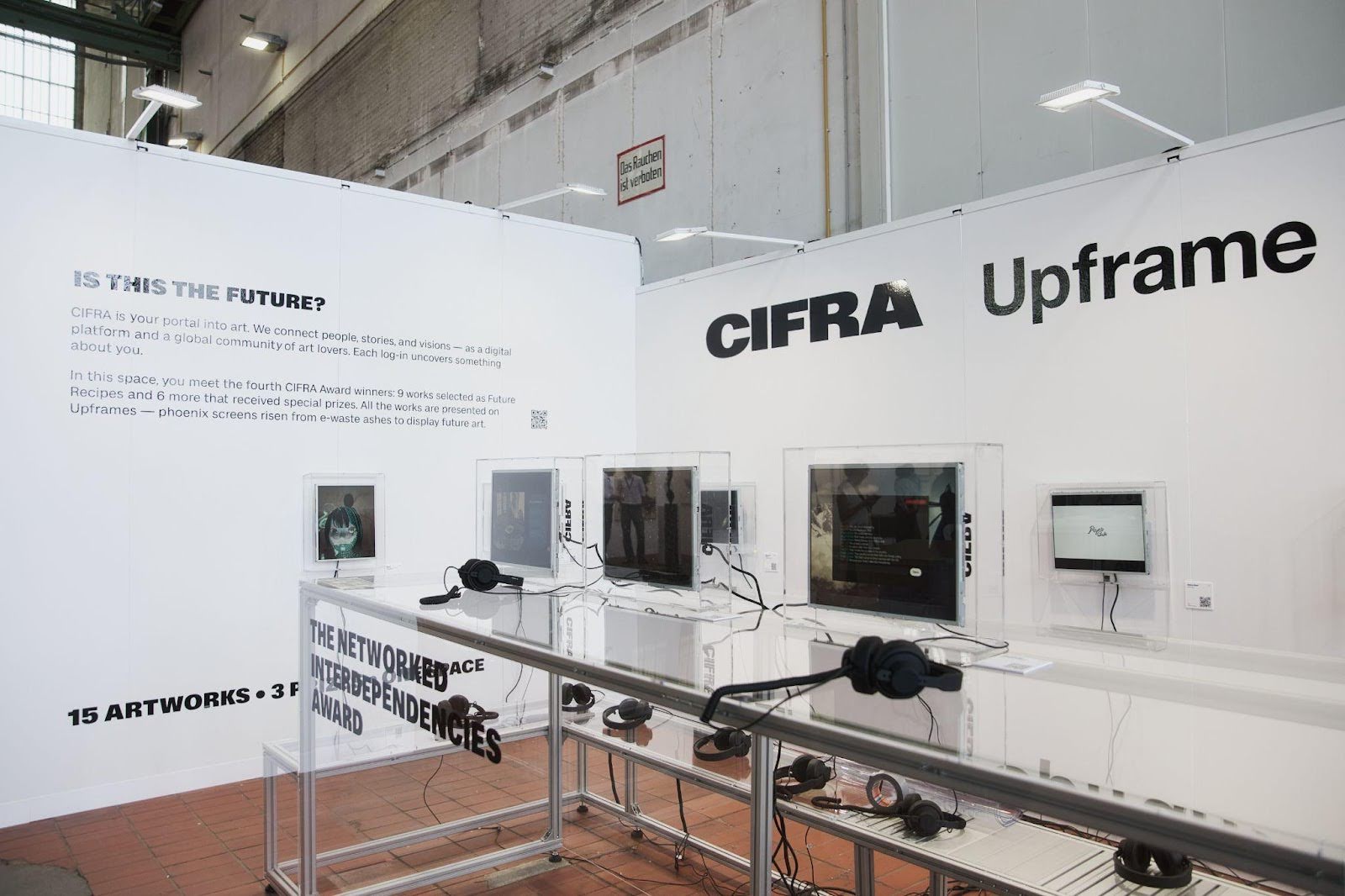
When discussing post-NFT platforms, it is useful to look at a specific case study — CIFRA. It represents a clear example of the emerging post-market model amplified to digital art. Rather than operating as a marketplace centered on transactions, it positioned itself as a platform for streaming and media art showcases through curated programs, exhibitions, and artist-focused editorial content with carefully crafted narrative. In many ways, its infrastructure functions closer to a digital museum than a sales-driven ecosystem.
CIFRA focuses on how digital art is distributed and experienced by prioritizing access and circulation over asset exchange. Artists are given a direct channel to reach audiences through curated presentation formats, while the platform emphasizes the viewing experience rather than the mechanics of buying and reselling.
Instead of relying on market signals, trending metrics, or algorithmic amplification tied to price activity, CIFRA put in the first place a culturally framed narrative which, as a result, replaces financial ranking.
CIFRA is completely changing the user’s portrait encouraging engagement from viewers rather than traders. Users interact with artworks through sustained viewing, careful exploration, and discovery. This changes the behavioral logic of the ecosystem: attention is driven by interest and interpretation, not short-term market movement.
Most importantly, CIFRA operates as infrastructure for media art rather than as a venue for transactions. By providing structured presentation, editorial crafted context, and continuous visibility, it enables digital and media art to integrate into a much wider cultural ecosystem.

Access /Ownership: Another Platform Logic of Digital Art
The post-NFT flow can be understood as a significant transition made from ownership-centric systems to the access-driven platforms. In the model known as “streaming”, value is based on the organic audience’s reach and cultural relevance. That is why platforms like CIFRA can be characterized by a strong movement towards a continuous presentation, broadening ecosystem shift.
This change was noticeable not only in digital art. This tendency started to be much more global as it can seem, at first sight, especially because of other creative sectors that have gone through similar transformations not so long ago. As for the music – it moved from collectible formats like vinyl toward streaming ecosystems known as Spotify. The same path was followed by the film industry, switching from DVD ownership to curated streaming platforms like Netflix or MUBI.
Speaking about the sustainability of the streaming-oriented model, it is important to highlight that it supports artistic practice rather than token issuance, it prioritizes real audience formation. Also. as a cultural structure, this type of platform is much more compatible with museums, galleries, collectors, and brands, enabling deeper institutional integration and long-term cultural legitimacy. All of these developments made possible the transition of digital art as an asset to its perception as a cultural medium.
Platforms as the Infrastructure Layer of Digital Culture in the Future
Looking ahead, platforms like CIFRA are likely to evolve into core infrastructure for digital and media art. Rather than functioning as a typical marketplace system, it will work as primary distribution channels, enabling continuous access to artworks beyond one-time sales.
Such type of platforms are designed to be a discovery engine for collectors, curators, and cultural institutions, guiding attention through carefully curated programs instead of commercial market signals. More broadly, such platforms will operate as connective systems getting together artists, audiences, and other cultural actors, while simultaneously forming long-term archives that preserve and contextualize digital art within an evolving cultural record, defining its place in a contemporary history of art.
To sum up, it is impossible not to notice the huge step the NFT era made by proving that digital art could be owned. However, time does not stand still, and this evolution is leading to the growing complexity and formation of a cultural infrastructure around digital art—one oriented toward conscious and sustainable consumption. As a result, the platform era is reshaping the chain of engagement and demonstrates that digital art can be experienced, not only owned. This tendency confirms that the future of digital art will be shaped less by speculation and more by platforms that build a dialogue with its audience by providing crafted narratives, contextual framing, and sustainable cultural presence.