





























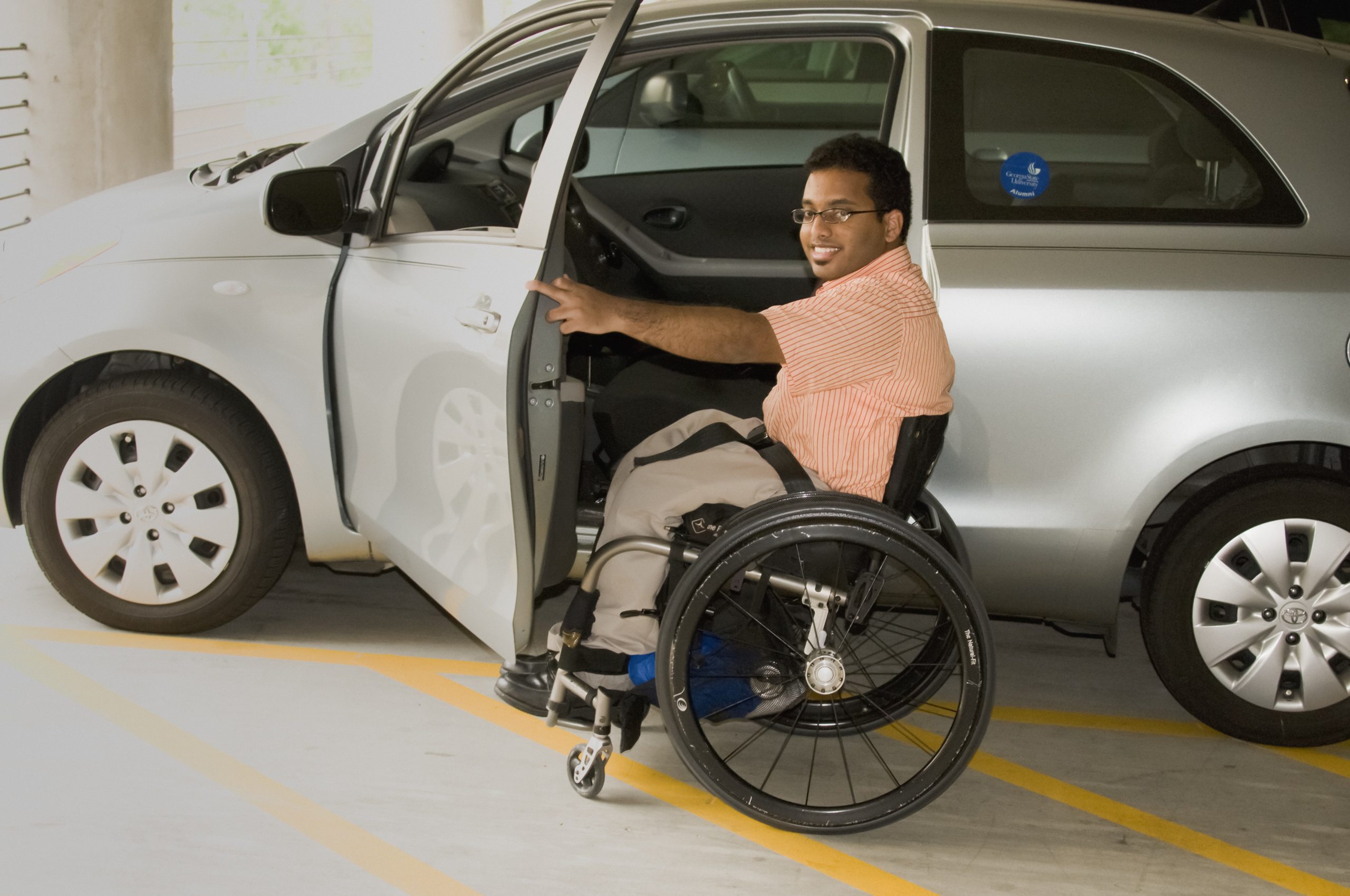
The European Commission’s recent updates to vehicle accessibility standards have prompted significant changes across the wheelchair vehicle manufacturing sector. These refined technical specifications, building upon the EC Whole Vehicle Type Approval framework, set clear benchmarks for safety, comfort and practicality in wheelchair accessible transport.
British and European manufacturers have responded by developing more advanced conversion techniques, particularly in areas such as floor lowering, ramp angles and wheelchair accessible vehicles restraint systems. The results are evident in the latest generation of adapted vehicles, which combine solid engineering with thoughtful design elements that benefit both wheelchair users and their carers.
The Growing Economic Impact of Wheelchair Accessible Vehicles in Europe
The wheelchair accessible vehicle (WAV) market has become a substantial economic sector across Europe, with current valuations reaching €2.1 billion in 2022. Market analysis from Fact.MR indicates this sector is poised for consistent growth at a compound annual rate of 6.8% through 2033, significantly outpacing standard automotive industry growth rates.
Join The European Business Briefing
New subscribers this quarter are entered into a draw to win a Rolex Submariner. Join 40,000+ founders, investors and executives who read EBM every day.
Subscribe
This expansion stems from notable demographic shifts occurring throughout the European Union. According to Eurostat data, the proportion of Europeans aged over 65 is projected to increase from 20.3% to 29.8% by 2050, creating heightened demand for mobility solutions. The European Disability Forum reports that 87 million Europeans currently live with some form of disability, representing a substantial market for accessible transportation options.
Regional variations in WAV adoption reveal a complex market landscape. Northern European countries including Sweden, Denmark and the Netherlands demonstrate penetration rates nearly double those of Southern European nations. This disparity relates directly to differences in public funding mechanisms, with Nordic countries allocating approximately 35% more per capita toward disability mobility solutions than Mediterranean counterparts.
The economic footprint extends beyond direct vehicle sales. The accessibility vehicle sector creates significant employment opportunities, with specialised conversion centres employing approximately 38,000 workers across the EU. These operations require skilled technicians trained in sophisticated engineering processes that transform standard production vehicles into fully accessible transportation.
European Regulatory Framework Shaping the WAV Industry
The European accessibility regulatory landscape has undergone substantial transformation in recent years, creating both challenges and opportunities for wheelchair accessible vehicle manufacturers. The EU Accessibility Act, fully implemented in 2022, established harmonised requirements across member states, replacing the fragmented approach that previously complicated cross-border trade.
Vehicle type approval standards vary significantly between European nations despite attempts at standardisation. Germany’s rigorous TÜV certification process evaluates WAVs against 64 distinct safety parameters, while France’s UTAC system emphasizes 48 key accessibility features. These variations require manufacturers to create market-specific adaptations, increasing production complexity and costs by an estimated 18-23%.
UK standards continue to influence continental manufacturing despite Brexit complications. The PAS 2012 specification, developed by the British Standards Institution, has become a de facto quality benchmark adopted by manufacturers throughout Europe. This technical standard addresses critical aspects including entry and exit gradients, interior dimensions for wheelchair manoeuvring, and advanced restraint systems.
Regulatory compliance adds approximately €4,800 to the average conversion cost, according to industry analysts at Maximize Market Research. However, these requirements have spurred innovation, with manufacturers developing modular conversion systems that maintain quality while reducing production times by up to 40%. The resultant higher initial prices are partially offset by improved resale values, with compliant vehicles retaining approximately 12% more value after three years compared to non-standardised conversions.
Market Segmentation and Consumer Preferences
The European wheelchair accessible vehicle market divides along multiple preference lines, with conversion methods representing a primary segmentation factor. Rear-entry conversions account for 62% of the market according to Transport Research Laboratory data, primarily due to their practicality in tight urban parking environments. Side-entry models, despite higher production costs averaging 15-20% more than rear-entry alternatives, maintain steady demand among users requiring frequent independent access without assistance.
Vehicle size preferences exhibit distinct regional patterns across European markets. Compact WAVs dominate in densely populated urban centres, particularly in Italy and Spain, where narrow streets necessitate smaller footprints. Medium-sized conversions lead overall market share at 52%, while full-size WAVs predominantly serve institutional buyers in healthcare and commercial transport sectors.
Purchase motivations vary significantly between institutional and individual buyers. Healthcare providers prioritise passenger capacity and operational efficiency, with 78% citing total cost of ownership as their primary consideration. Individual consumers place greater emphasis on comfort features, with 67% ranking ease of entry and exit as their foremost concern, followed closely by interior adaptability according to Mobility Research UK findings.
The pricing structure across Europe reflects both conversion complexity and regional economic conditions. Entry-level converted vehicles start at approximately €22,000 in Eastern European markets, rising to €36,000 in Nordic countries. This price differential relates directly to labour costs, with conversion processes requiring between 65-120 hours of specialised work depending on adaptation complexity.
The Rise of Premium Conversions in Northern European Markets
Northern European countries have witnessed remarkable growth in high-end wheelchair accessible vehicle conversions, with luxury adaptations increasing market share by 34% since 2020. This trend appears most pronounced in Sweden, Norway and Denmark, where average conversion values exceed €48,000, approximately 28% higher than European averages.
Price point analysis reveals significantly higher profit margins in premium conversions. Standard adaptations typically generate 12-15% profit margins for manufacturers, while luxury conversions yield 22-26% returns according to industry reports. This financial incentive has attracted specialised manufacturers to focus exclusively on high-end market segments.
Consumer research conducted by the European Mobility Network identifies distinct preferences unique to Northern European buyers. Climate control systems rank particularly high, with 82% of Scandinavian purchasers specifying advanced heating capabilities compared to 46% of buyers in Mediterranean regions. Additional priorities include enhanced sound insulation (76%) and sophisticated cabin lighting systems (64%), reflecting emphasis on passenger comfort during long journeys through challenging weather conditions.
Manufacturers including Tripod Mobility in the Netherlands and Paravan in Germany have established dominant positions in premium market niches. These specialists focus on highly customised conversions with extensive use of lightweight composites and advanced electronic systems. Their business model prioritises bespoke adaptations over volume production, with annual outputs of 450-600 vehicles despite commanding significant market value.
Financing Models Transforming Accessibility
Innovative financing approaches have dramatically expanded accessibility to wheelchair accessible vehicles throughout Europe. Government-backed programmes vary significantly in structure and scope, creating substantial differences in market penetration. The UK’s Motability Scheme serves as Europe’s largest dedicated WAV financing programme, supporting approximately 65,000 wheelchair accessible vehicles according to the Department for Transport statistics.
Comparative analysis with continental programmes reveals structural advantages and limitations. Germany’s Kraftfahrzeughilfe provides direct subsidies averaging €9,500 per eligible recipient but requires supplemental funding from private sources. France’s PCH (Prestation de Compensation du Handicap) offers variable funding based on individual assessment, while Spain’s CEAPAT programme provides technical consultation but limited financial support.
Insurance providers have emerged as significant financing facilitators across European markets. Specialised policies offered by entities like Zurich