































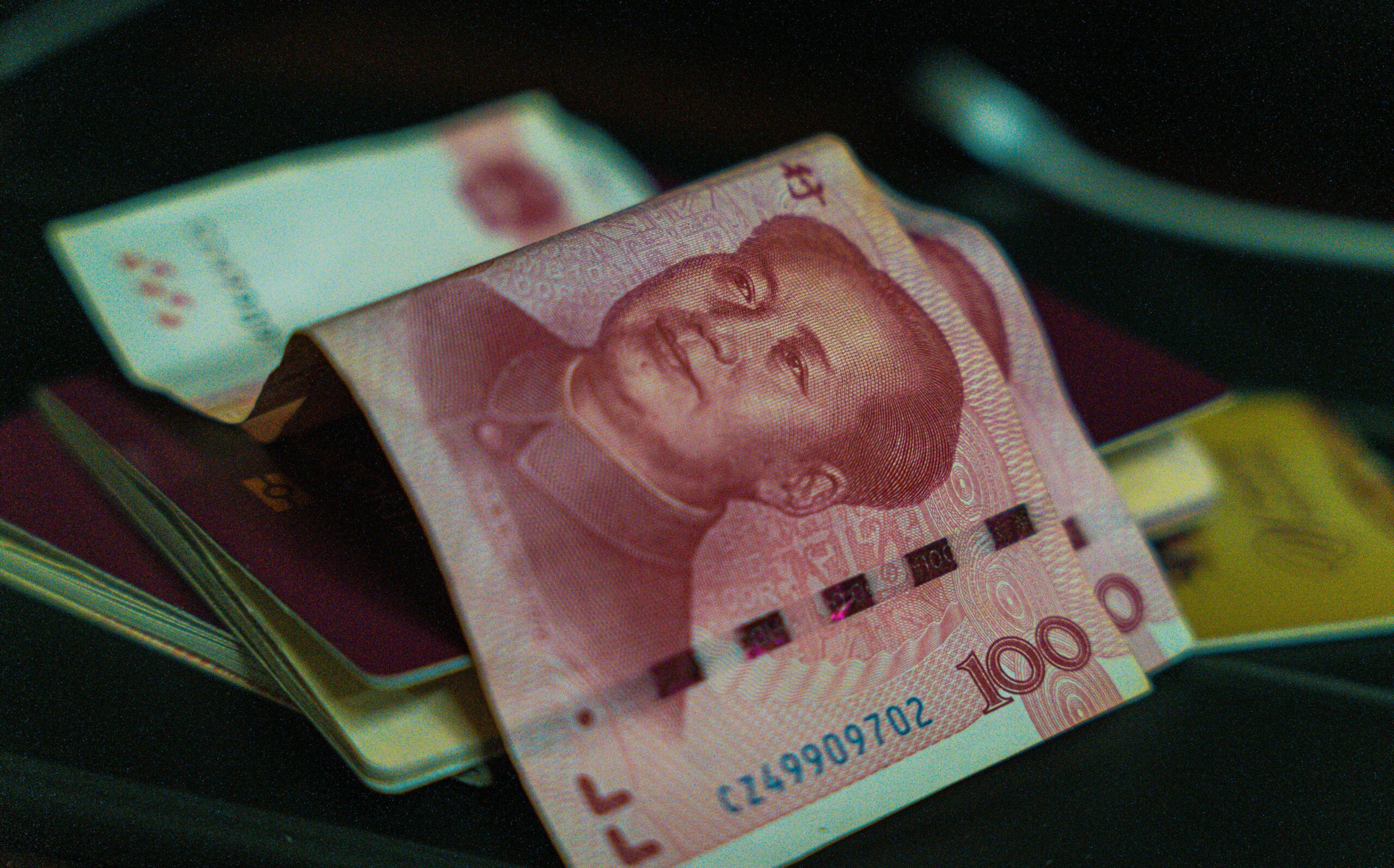
Hong Kong, 24 April 2026 — US banks led by Goldman Sachs have borrowed a record Rmb47.5 billion in offshore renminbi debt so far in 2026, with Goldman accounting for the majority of self-led issuance, the Financial Times reported this morning. Total issuance in the so-called dim sum bond market — renminbi-denominated debt issued outside mainland China, primarily in Hong Kong — has hit Rmb300 billion (US$44 billion) year-to-date, more than double the equivalent point in 2025, which itself was a record year. The story is straightforward and consequential in equal measure: the world’s most powerful investment bank is funding itself in the currency of America’s principal strategic competitor, because the maths increasingly demands it.
The macro driver is a yield gap that is now too large for institutional treasurers to ignore. China’s 10-year sovereign yield sits at roughly 1.82%, against 4.46% for the US Treasury equivalent. Borrowing in renminbi is approximately 60% cheaper than borrowing in dollars at current rates, and for an investment bank funding tens of billions of dollars in trading inventory, working capital and counterparty obligations, that arbitrage compounds into hundreds of millions of basis-point savings annually.
Why Hong Kong, Not Shanghai
Join The European Business Briefing
New subscribers this quarter are entered into a draw to win a Rolex Submariner. Join 40,000+ founders, investors and executives who read EBM every day.
SubscribeThe dim sum market matters because it solves the structural problem that has historically kept Wall Street out of renminbi funding. Onshore yuan bonds — known as panda bonds — sit inside mainland China’s capital controls, which means proceeds cannot be moved offshore freely and currency hedging is operationally heavy. Dim sum bonds, issued in Hong Kong under more familiar legal infrastructure, give US banks the yield arbitrage without the capital-account complications.
Beijing has actively widened the channel. Recent regulatory changes have made it easier for mainland Chinese investors to buy fixed-income products listed in Hong Kong, creating a captive base of yield-hungry buyers willing to absorb Goldman’s, Morgan Stanley’s and other US banks’ issuance at spreads that work for both sides. Mainland investors get higher yields than they can find domestically; Wall Street gets cheaper funding than dollar markets offer. Hong Kong sits in the middle, taking the intermediation fees.
The Strategic Picture
For European business readers, the implications are larger than a single bond market. The dim sum surge is one of three connected trends rebalancing global finance toward the renminbi, alongside record panda bond issuance from sovereign and supranational borrowers and the rapid expansion of yuan-settled trade finance — the renminbi now accounts for 34.5% of China’s cross-border goods trade settlements, up from 10% in 2017.
The reputational threshold has shifted decisively. Five years ago, a US investment bank funding itself meaningfully in renminbi would have been a political event. Today it is a treasury optimisation. Isaac Wong, Goldman’s head of fixed income, currencies and commodities distribution for Asia ex-Japan, framed the bank’s strategy in functional rather than geopolitical terms — the renminbi market simply offers an attractive alternative funding source given current investor demand.
What Europe Should Take From This
European banks have so far been more cautious. Deutsche Bank placed the largest single panda bond ever issued by a foreign bank in March 2026 at Rmb5.5 billion, but European institutions remain materially less active in dim sum issuance than their US counterparts. The strategic question for European treasurers is whether to accelerate participation now, while the yield gap is wide and Beijing is actively encouraging foreign issuance, or to wait until the political weather around renminbi exposure clarifies.
Both decisions carry risk. Wait too long and the arbitrage closes as more issuers enter and spreads compress. Move too quickly and a sudden geopolitical event — a tariff escalation, a currency intervention, a regulatory reversal — leaves European institutions holding renminbi liabilities at exactly the wrong moment.
The Bigger Read
What Wall Street is signalling, quietly and through the unromantic plumbing of treasury management, is that the renminbi has crossed the threshold from political risk to financial opportunity. Goldman’s record-setting issuance is not a bet on China’s geopolitical alignment with the West. It is a recognition that, at current yield differentials, the cost of not funding in renminbi has become higher than the cost of doing so. That is how reserve currencies are built — not through political declaration, but through cumulative, rational, treasury-level decisions taken one issuance at a time.
European banks watching from the sidelines should take the lesson seriously.
Related Analysis