





EBM NEWSDESK ANALYSIS By Nick Staunton, Editor-in-Chief
Staggering Nasdaq Vaulation
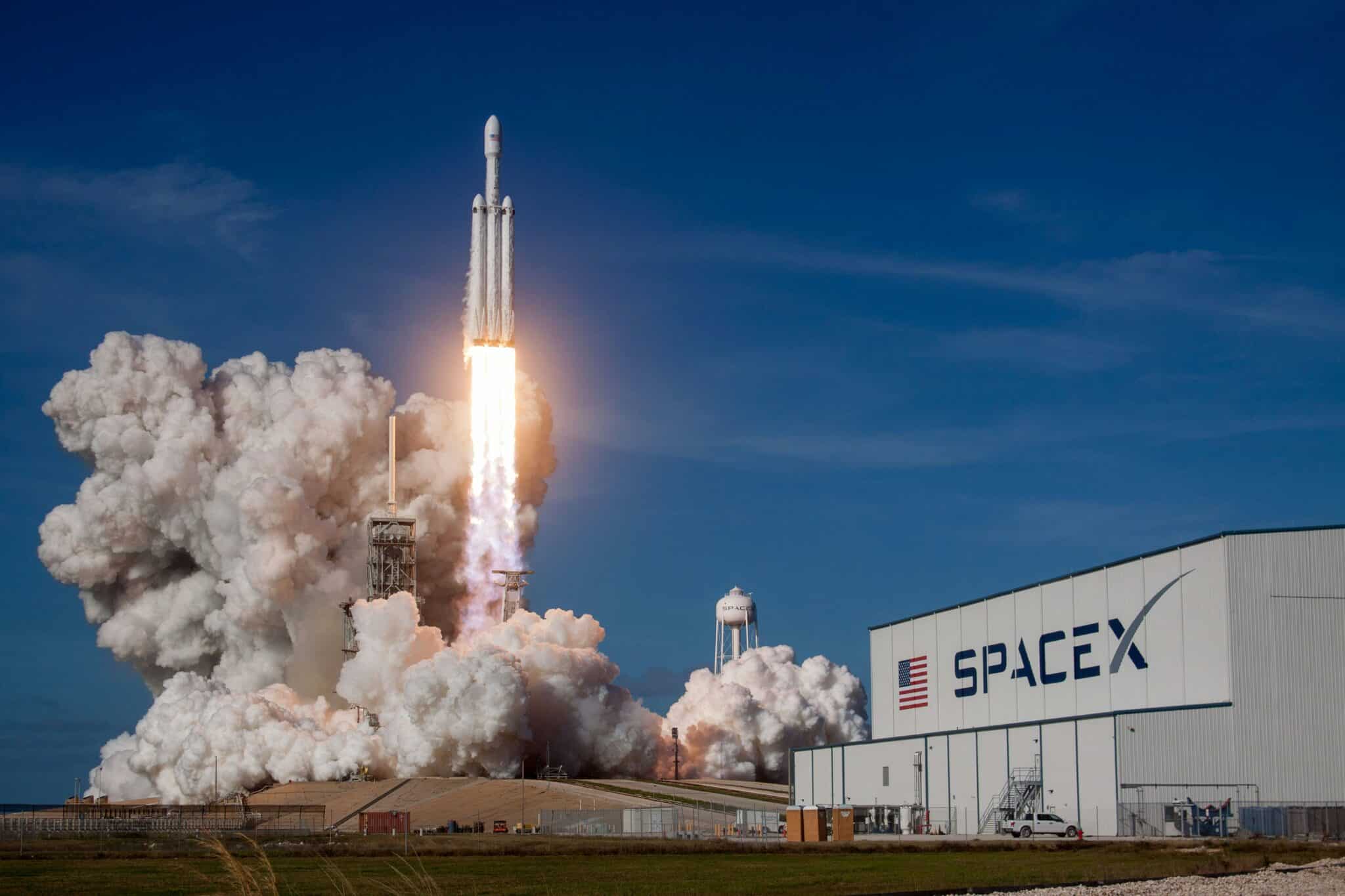
SpaceX is targeting $135 per share in what would be the largest initial public offering in history — raising $75 billion at a $1.78 trillion valuation on the Nasdaq. The headlines have focused on Elon Musk, on Starlink subscriber growth, on Starship’s ambitions to reach Mars. What they have largely ignored is the more uncomfortable fact sitting in the S-1: SpaceX is not primarily a technology company seeking public capital to fund innovation. It is a defence contractor seeking a public market valuation for a business that runs, to an extraordinary degree, on US government money.
That distinction matters enormously — for how investors should price the IPO, for how regulators should scrutinise it, and for what it means for Europe’s increasingly fragile claims to space sovereignty.
The Government Customer Nobody Is Talking About
The US government was SpaceX’s single largest customer in 2025, accounting for approximately $4 billion in revenue from the Space segment alone. That figure does not capture the full exposure. Analysts estimate that $10 to $12 billion of projected 2026 revenue — across NASA contracts, Pentagon programmes, National Reconnaissance Office missions and Space Force agreements — is directly dependent on continued US government spending.
Join The European Business Briefing
New subscribers this quarter are entered into a draw to win a Rolex Submariner. Join 40,000+ founders, investors and executives who read EBM every day.
SubscribeIn the weeks before the IPO filing, the Pentagon accelerated that dependency significantly. Space Force awarded SpaceX a $2.3 billion satellite communications contract and a $4.2 billion missile-tracking system contract — both fast-tracked through the Pentagon’s “other transaction authority,” a procurement mechanism that bypasses standard competitive tendering. Combined, $6.5 billion in new defence contracts arrived on SpaceX’s books within the IPO window. The timing was not coincidental.
SpaceX has accumulated more than $24 billion in cumulative US federal contracts since 2008. Its share of the Pentagon’s PLEO secure broadband programme — awarded through task orders to Starlink-derived infrastructure — stands at approximately 97% of a $13 billion programme ceiling. The Department of Defense has, in effect, standardised on SpaceX for secure military broadband. That is not a technology company with government clients. That is a defence utility with a technology wrapper.
The Musk Risk Wall Street Is Underpricing
The key-person risk embedded in this IPO is without precedent in the history of public markets. SpaceX’s valuation, its contract pipeline, its relationship with the Pentagon and its preferred regulatory treatment are all substantially dependent on Elon Musk’s personal proximity to the current US administration. Defence Secretary Pete Hegseth visited SpaceX’s Texas facility in January and publicly praised the company’s speed relative to traditional defence procurement. The FAA subsequently authorised SpaceX to conduct up to 76 Starship launches per year from a military-owned launchpad — nearly three times the number Space Force officials had outlined in a previous planning memo.
That is an extraordinary set of regulatory accommodations. It is also an extraordinary concentration of political risk in a single individual. Tesla’s board has already acknowledged publicly that the question of what the company is worth without Elon Musk is the central valuation challenge facing that business. The same question applies to SpaceX with even greater force — and at a $1.78 trillion valuation, the multiple compression that would follow any deterioration in Musk’s political standing would be severe.
The S-1 also discloses a $4.9 billion GAAP net loss in 2025, driven by capital expenditure, stock-based compensation and losses absorbed through the February 2026 merger with xAI. Adjusted EBITDA of $6.6 billion is the figure the roadshow will lead with. The gap between the two numbers — and what sits inside it — is where the most important due diligence questions live.
The European Dimension
For European investors and policymakers, the SpaceX IPO is not merely a capital markets event. It is a geopolitical signal about the structural disadvantage Europe now faces in space.
Ariane 6 — Europe’s flagship heavy-lift launcher — completed four successful launches in 2025 and is targeting eight in 2026. SpaceX’s Falcon 9 completed 165 launches in 2025 with 100% payload delivery success. The gap is not closing. It is widening. Ariane 6 is not reusable, cannot yet match SpaceX on cost per kilogram, and is scaling at a fraction of the pace. The European Space Agency’s own pricing data shows an Ariane 62 launch costs approximately $96 million — broadly comparable to a Falcon 9 at current dollar values — but without the reusability economics that will progressively reduce SpaceX’s cost base while Ariane’s remains relatively fixed.
The strategic consequences are concrete. European institutional payloads — Galileo navigation satellites, Copernicus Earth observation missions, the IRIS² secure connectivity constellation — are mandated to fly on European launchers. That mandate exists precisely because European governments understand that depending on a single foreign provider, controlled by a single individual with his own commercial and political interests, is an unacceptable strategic vulnerability. The technology sovereignty argument that Brussels has applied to semiconductors, cloud computing and AI applies with equal force to launch infrastructure — and Europe is losing that argument in space more visibly than anywhere else.
Starlink’s military variant, Starshield, is already embedded in US national security architecture. European defence planners are acutely aware that the alliance’s most capable satellite communications infrastructure is owned and operated by a private American company whose CEO’s political allegiances have shifted demonstrably in the past two years. That is not a comfortable position for NATO partners whose own launch capability runs to eight flights per year.
What the IPO Actually Prices
Strip out the Mars ambitions, the Starship optimism and the orbital data centre projections, and what public market investors are being asked to buy at $1.78 trillion is primarily a heavily government-dependent launch and satellite communications business with extraordinary key-person concentration, a GAAP net loss, and a competitive moat that is real but contingent on continued political proximity to Washington.
The bull case — and it is a genuine one — is that Starship works at scale, that the cost per kilogram economics collapse to levels that reprice the entire space economy, and that SpaceX’s first-mover advantage in reusable heavy-lift becomes a structural monopoly comparable to what Amazon built in cloud infrastructure. Cathie Wood’s base case puts SpaceX at $2.5 trillion by 2030. That scenario is not implausible. It requires a great deal to go right simultaneously.
The bear case is simpler: $10 to $12 billion of annualised revenue is one administration change, one procurement review, or one Musk controversy away from serious disruption. At a $1.78 trillion valuation, that is priced as if it cannot happen. History suggests it can.
The Verdict
SpaceX is a genuinely extraordinary business — operationally, technologically and commercially. The Falcon 9’s reliability record is unmatched in the history of space launch. Starlink has demonstrated that satellite broadband can achieve genuine mass-market scale. The company has transformed what is commercially possible in space in ways that no government programme has matched.
But the SpaceX IPO is not a straightforward technology listing. It is the privatisation of a critical defence asset, priced at a multiple that assumes perpetual political favour, continued government dependency and the successful execution of programmes that do not yet exist at commercial scale. Goldman Sachs and Morgan Stanley will package it as the infrastructure play of the century. Institutional investors with fiduciary duties should read the defence contract schedule before they read the Starship projections.
Europe, meanwhile, should read both — and draw its own conclusions about what it means to have the western alliance’s most critical space infrastructure owned, operated and controlled by one man in Texas.
“SpaceX’s Space Force awarded $6.5 billion in new contracts in the weeks before the IPO filing. The Department of Defense has standardised on SpaceX for secure military broadband. This is not a tech listing. It is a defence privatisation at a $1.78 trillion valuation.”
RELATED READS:
- The $1 Trillion Question: OpenAI Files for the Most Anticipated IPO in History — Three near-trillion-dollar listings targeting public markets simultaneously. The capital absorption question is not trivial.
- Europe’s Tech Sovereignty Gamble: Can the EU Break Free From Silicon Valley? — The dependency argument Brussels applies to chips and cloud applies with equal force to launch infrastructure. Europe is losing it in space.
- Revolut’s $115 Billion Secondary Sale Mints Europe’s First Centicorn — The week’s other landmark valuation event — and a reminder that European capital markets can produce world-class companies when conditions allow.


