

























Strategic resources, geopolitical positioning, and economic interests drive expansionist agenda as NATO alliance faces unprecedented strain
President Donald Trump’s renewed push to acquire Greenland—escalating from rhetorical interest to explicit consideration of military action—represents far more than territorial ambition. Behind the inflammatory rhetoric lies a calculated business strategy targeting one of the planet’s most resource-rich territories, with implications that could reshape global supply chains, redefine Arctic geopolitics, and fundamentally alter the post-World War II international order.
The White House confirmed Tuesday that the administration is “discussing a range of options” to pursue Greenland acquisition, with press secretary Karoline Leavitt explicitly stating that “utilizing the U.S. Military is always an option at the Commander in Chief’s disposal.” This statement, following the successful US military operation that captured Venezuelan President Nicolás Maduro, signals that Trump’s expansionist rhetoric has evolved into actionable foreign policy—with profound implications for European security and global economic order.
The Resource Imperative: Rare Earths and Energy Wealth
At the heart of Trump’s interest lies Greenland’s extraordinary mineral wealth. The island contains rare earth reserves almost equivalent to the entire United States—approximately 18% of global reserves for neodymium, praseodymium, dysprosium, and terbium. These materials are not exotic curiosities but essential components for modern industrial civilization: electric vehicle motors, wind turbines, military equipment, smartphones, and advanced weaponry all depend on rare earth elements.
The strategic significance becomes clear when examining the current supply chain. China controls approximately 90% of global rare earth processing, a monopoly Beijing has weaponized through export controls and targeted restrictions. In April 2025, China imposed new export restrictions on seven rare earth minerals and magnets in response to US tariffs, demonstrating how resource dominance translates into geopolitical leverage. For Washington, Greenland represents a potential path to breaking Chinese supply chain stranglehold—if the substantial logistical and economic hurdles can be overcome.
Three decades ago, the United States produced a third of the world’s rare earth elements while China produced about 40%. By 2011, China controlled 97% of global production, a dramatic shift that Chinese leader Deng Xiaoping presciently anticipated in 1992 when he remarked: “The Middle East has oil; China has rare earth elements.” This concentration of supply creates vulnerabilities that Western economies are now desperate to address, with Greenland positioned as a potential solution.
Beyond rare earths, Greenland harbors an estimated 31.4 billion barrels of oil equivalent, including oil, gas, and natural gas liquids. While modest by global standards—the US alone consumed 7.39 billion barrels of petroleum in 2023—these reserves gain significance in the context of energy security and Arctic access. As climate change melts Arctic ice, previously inaccessible deposits become economically viable, while new shipping routes open that could reorient global trade patterns.
A 2023 survey indicated that 25 of 34 minerals deemed “critical raw materials” by the European Commission can be found in Greenland, including graphite, copper, nickel, zinc, gold, diamonds, iron ore, and tungsten. The island’s Tanbreez Mine contains substantial deposits of eudialyte ore, rich in rare earth elements including neodymium, cerium, lanthanum, and yttrium, as well as gallium—a critical mineral China placed under export controls due to its military applications.
Former national security adviser Mike Waltz explicitly stated in January 2024 that the administration’s focus on Greenland was “about critical minerals” and “natural resources,” despite Trump’s public claims that acquisition is primarily about national security rather than resources. This tension between stated motivations and underlying economic interests characterizes the entire Greenland strategy.
The Economic Reality: A Treasure Buried in Ice
However, the business case for Greenland extraction faces severe practical constraints. The State Department recently provided an analysis of untapped resources in Greenland at Secretary of State Marco Rubio’s request. The assessment concluded there is no reliable study of how vast those resources may be, and more critically, that tremendous costs would be involved in accessing resources given extreme cold temperatures and complete lack of infrastructure.
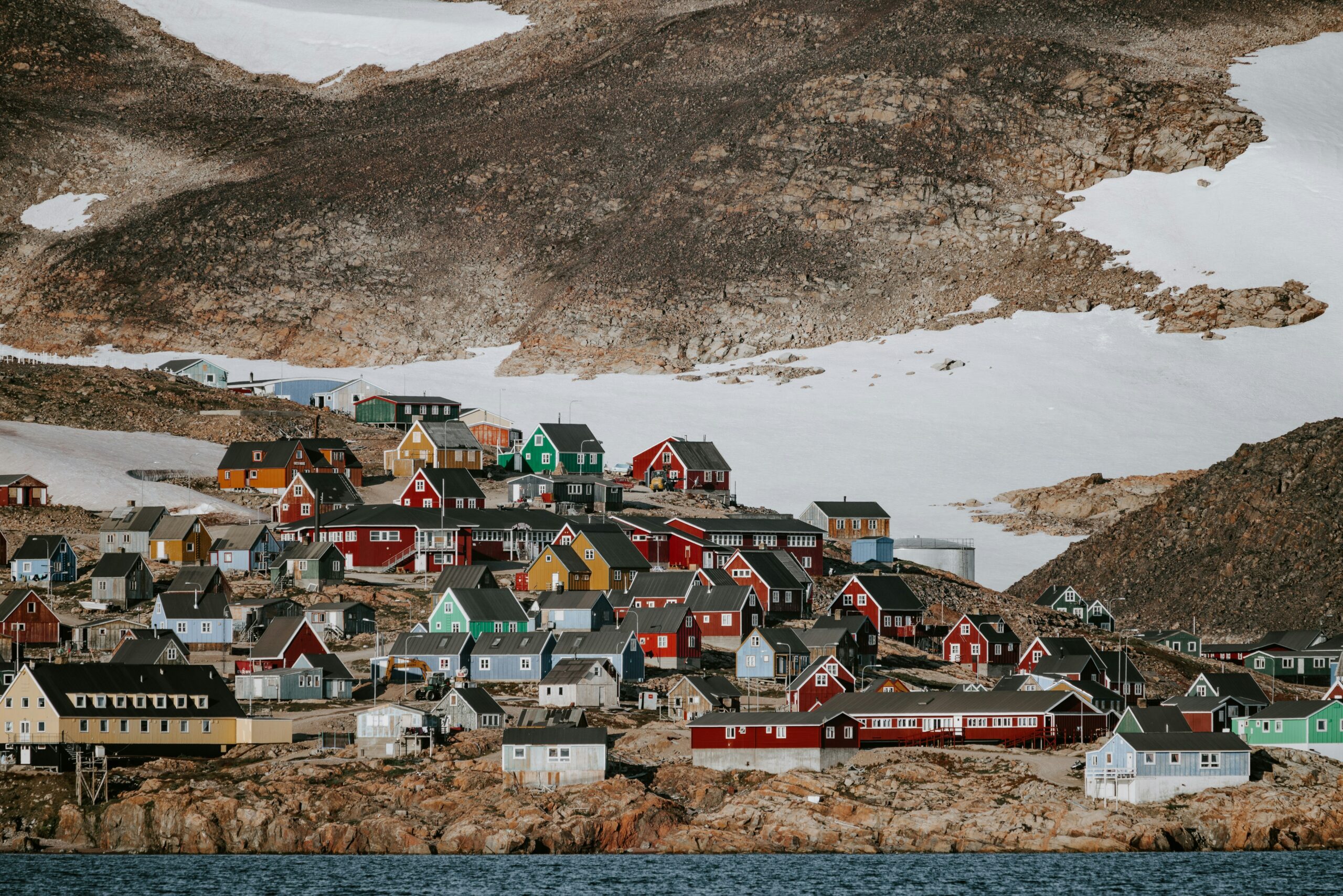
Greenland’s population stands at just 56,699, with only 65 people involved in mining as of 2020. The requisite labor force, technical expertise, and industrial capacity simply do not exist locally. Arctic development costs far exceed comparable projects in more temperate regions, with labor laws stricter than those in Chinese rare earth mines in Mongolia, according to Arctic experts. The island has no railways or highways connecting potential mining sites, and freezing conditions on remote sites create logistical nightmares.
Denmark’s central bank warned in a Tuesday report that Greenland’s economy faces “major challenges ahead,” with modest growth and serious pressure on public finances. The expansion of airport infrastructure is nearing completion, while planned major projects in energy supply have not yet begun. Critically, vital shrimp stocks—the backbone of Greenland’s fishing-dependent economy—are declining, while public finances “deteriorated surprisingly sharply in 2025.” Liquidity in the Greenland Treasury fell to critically low levels in the second half of the year.
Greenland’s population is expected to shrink 20% by 2050 as the territory struggles to attract migrants to replace emigrating residents. This demographic crisis compounds economic challenges and raises questions about who would staff the massive industrial operations required to extract Greenland’s mineral wealth at commercially viable scales.
The island’s government has also erected political barriers. In 2021, the left-wing Inuit Ataqatigiit party banned uranium mining, effectively halting development of the Kuannersuit rare earths project, which had uranium as a byproduct. This decision, formalized in law, led to the revocation of Australian firm Greenland Minerals’ rights to the project after 15 years of investment. The company is now seeking $11.5 billion in compensation, creating a shadow of uncertainty over Greenland’s investment climate. According to experts, “the political risk in Greenland is considered to be higher than in many African countries.”
In summer 2021, Greenland also banned further petroleum licenses. By then, all major oil and gas companies had already departed due to declining oil prices and increasing regulatory costs. Since the 1970s, some 40 companies drilled only 15 exploration wells without making any commercial discoveries. The combination of regulatory hostility, environmental constraints, and prohibitive extraction costs creates a business environment that contradicts Trump’s vision of rapid resource development.
Geopolitical Implications: Fracturing the Western Alliance
The geopolitical ramifications of Trump’s Greenland ambitions extend far beyond bilateral US-Denmark relations. On Tuesday, leaders from Denmark, France, Germany, the United Kingdom, Italy, Spain, and Poland issued a joint statement declaring: “Greenland belongs to its people. It is for Denmark and Greenland, and them only, to decide on matters concerning Denmark and Greenland.” This coordinated European response represents an unprecedented rebuke to an American president by NATO allies.
Danish Prime Minister Mette Frederiksen warned Monday that US military action against Greenland “could effectively end NATO,” noting that “if the US chooses to attack another NATO country militarily, everything stops, including NATO and thus the security that has been provided since the end of World War II.” This stark warning underscores how Trump’s resource ambitions threaten the foundational Western security architecture that has underpinned European stability for eight decades.
Greenland occupies a strategic geopolitical position astride the GIUK gap—a maritime passage between Greenland, Iceland, and the UK linking the Arctic to the Atlantic Ocean. Control of this chokepoint would give the United States unparalleled ability to monitor and potentially interdict naval movements between the Arctic and Atlantic, a capability with obvious implications for Russian and Chinese maritime activities. Russia and China have both increased their Arctic presence, with Chinese companies already invested in developing Greenland’s resources and Russian President Vladimir Putin this week lauding construction of new nuclear-powered icebreakers to “consistently strengthen Russia’s position” in the region.
For Canada, American control of Greenland would create a strategic nightmare. Ottawa would suddenly face American neighbors on three sides—south (continental US), north (Arctic territories), and east (Greenland)—while remaining barricaded by the Arctic on the fourth side. Greenland would serve as an effective bulwark against Canadian maneuverability in the North Atlantic, isolating Canada from remaining European allies. Trump’s previous threats to annex Canada itself would suddenly acquire deadly serious credibility in this context.
The irony is profound: the United States already maintains extensive military facilities in Greenland under treaty arrangements with Denmark that permit vast latitude for American bases, landing rights, and military operations. The US Pituffik Space Base (formerly Thule Air Base) operates on Greenland territory without requiring formal American sovereignty. From a pure national security perspective, Washington gains little from acquisition that it does not already possess through existing agreements with a NATO ally.
The China Factor: Supply Chain Geopolitics
China’s domination of critical minerals supply chains provides essential context for understanding Trump’s strategy. Beijing pursued a targeted policy since the 1990s to achieve dominance in rare earth elements, implementing national policies prioritizing selected minerals and technologies while Western countries proved content to move polluting mining and processing activities offshore.
China developed an industrial sector with incentives encouraging companies to supply strategic materials, implementing national plans for mineral resources alongside specialized plans for specific minerals and provinces. These plans set production targets ensuring steady supply while Western nations deindustrialized their mining sectors. The result is a dependency relationship that Trump and his advisers view as an existential national security threat.
Chinese companies are already heavily invested in Greenland’s mineral development. Shenghe Resources is developing the Kvanefjeld project, while Chinese firms hold significant stakes in other rare earth ventures. For Trump, allowing China to control access to Greenland’s resources while the United States lacks alternative supply sources represents an intolerable strategic vulnerability. The administration’s “America First” logic dictates securing resources under direct American control rather than relying on international partnerships or market mechanisms.
This zero-sum approach to resource security contradicts the multilateral, alliance-based strategy that characterized American foreign policy from 1945 through 2016. Where previous administrations sought to build coalitions and strengthen partners to counter Chinese influence, Trump’s unilateral approach risks alienating the very allies whose cooperation would be essential for effectively countering Beijing’s resource dominance.
Economic Analysis: Costs, Benefits, and Opportunity Costs
From a pure business perspective, acquiring Greenland makes little economic sense under current conditions. Denmark reportedly spends substantial sums subsidizing Greenland’s economy and infrastructure—costs that would immediately transfer to American taxpayers upon acquisition. The island generated just $3 billion in GDP in 2024, heavily dependent on fishing exports and Danish subsidies, with minimal industrial capacity or revenue-generating potential in the near term.
Developing Greenland’s mineral resources would require investments in the hundreds of billions of dollars for infrastructure alone: ports capable of handling heavy industrial equipment, power generation facilities, housing for workers, transportation networks, processing plants, and environmental mitigation systems. The timeline for meaningful resource extraction would span decades, not years, with profitability uncertain given Arctic operating costs that dwarf those in more accessible regions.
The State Department’s analysis highlighting the lack of reliable resource surveys is particularly damning from an investment perspective. Without comprehensive geological data establishing extraction feasibility and deposit extent, claims about Greenland’s mineral wealth remain speculative. Major mining companies systematically departing Greenland over the past two decades suggests industry professionals have already evaluated the risk-reward equation and found it wanting.
Yet Trump appears to view Greenland through a different lens—not as a conventional investment requiring positive return on capital, but as strategic asset whose value derives from denying resources to competitors and securing supply chain independence. This logic mirrors how nations historically approached territorial acquisition when resource access determined industrial capacity and military power.
The economic calculation also considers opportunity costs. American attention and resources devoted to Greenland acquisition represent bandwidth unavailable for other strategic priorities. Polling shows Americans are focused on domestic issues, particularly inflation and economic security, with limited appetite for expansionist foreign adventures. A Reuters-Ipsos poll released Monday showed Americans evenly split on the Venezuela operation, with previous polls showing 55%-28%, 54%-23%, and even 73%-27% opposition to attempting to take Greenland by various means.
The Arctic Dimension: Climate Change as Strategic Catalyst
Climate change serves as both enabler and accelerant for Trump’s Greenland ambitions. As Arctic ice melts, previously inaccessible mineral deposits become reachable, while new shipping routes through Arctic waters promise to dramatically reduce transit times between Asia, Europe, and North America. These routes bypass traditional chokepoints like the Suez and Panama canals, potentially reshaping global trade patterns.
The Arctic is warming approximately twice as fast as the global average, with sea ice coverage shrinking to 3.74 million square kilometers in late 2020—2.48 million square kilometers below the 1981-2010 average. This transformation opens Greenland’s ice-free edges to exploration while making northern shipping routes navigable for longer periods each year, despite Trump dismissing climate change as “the greatest con job.”
Russia, with its sprawling Arctic coastline, has long prioritized the region, viewing it as critical to national strategy and economic development. The estimated value of minerals in Arctic Russia stands at $1.5-2 trillion. Putin’s emphasis on strengthening Russia’s Arctic position through new icebreakers and infrastructure investments signals Moscow’s determination to dominate the region. For Trump, allowing Russia and China to control Arctic resources and shipping routes while America remains dependent on access through Danish-controlled Greenland represents an unacceptable strategic position.
Conclusion: Empire Building in the 21st Century
Trump’s Greenland ambitions represent an attempt to resurrect 19th-century territorial expansion in a 21st-century context, applying business logic to geopolitical competition in ways that challenge fundamental assumptions about international order. The resource wealth is real, the Chinese supply chain dominance creates genuine vulnerabilities, and Arctic access grows more strategically important as climate change transforms the region.
However, the practical obstacles remain formidable: prohibitive extraction costs, non-existent infrastructure, hostile investment climate, demographic decline, and most critically, the opposition of Greenland’s 57,000 residents, 85% of whom oppose American rule according to polling. Denmark and European allies have made clear that sovereignty is non-negotiable, with warnings that military action would destroy NATO creating a constraint even Trump may find difficult to ignore.
The ultimate question is whether Trump’s Greenland strategy represents serious policy or theatrical positioning designed to extract concessions on other issues. The Venezuela operation suggests the former—that Trump is willing to use military force to pursue territorial ambitions previously considered beyond the pale. For European business and security planners, the sobering reality is that American acquisition of Greenland—whether through purchase, coercion, or military action—has moved from theoretical possibility to realistic scenario requiring contingency planning.
The coming months will reveal whether international pressure, practical obstacles, and domestic political considerations force Trump to abandon his Greenland ambitions, or whether the world is witnessing the opening chapter of a new era of American expansionism with profound implications for global order, resource security, and the future of the Western alliance. What remains certain is that the business case for Greenland—combining rare earth independence, energy security, and Arctic dominance—has elevated a remote, ice-covered island to the center of 21st-century great power competition, with consequences that will reverberate far beyond the Arctic Circle.
Related Topics: