



EBM Weekend Read
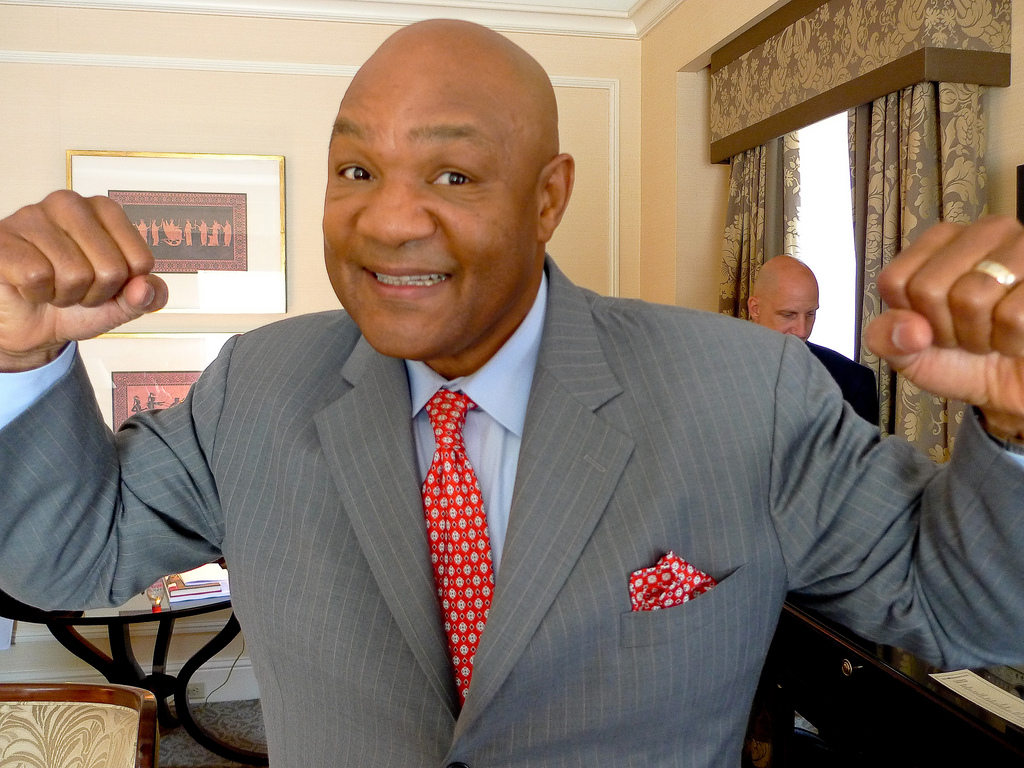
Houston, 25 April 2026 — When George Foreman died on 21 March 2025 at the age of 76, the obituaries led with the boxing — the 1968 Olympic gold medal in Mexico City, the demolition of Joe Frazier in 1973, the loss to Muhammad Ali in Kinshasa in 1974, the historic comeback at 45 to become the oldest heavyweight champion in history. All of which was extraordinary. None of which made him most of his money. By the time the George Foreman Lean, Mean, Fat-Reducing Grilling Machine had finished its commercial run, Foreman had earned more than $200 million in personal compensation from the grill — a multiple of roughly 40 times the $5 million purse he received for the Rumble in the Jungle, which was by some distance the biggest single payout of his entire boxing career. The Foreman grill is, quietly, the cleanest case study in modern licensing economics that exists. It is also a story of one of the luckiest phone calls in commercial history, because the grill was originally offered to Hulk Hogan, who turned it down for a meatball maker.
The lesson of the Foreman grill is not about boxing or kitchen appliances. It is about the structural difference between earning money for doing something (which scales linearly and ends when you stop) and earning money for lending your name to something (which scales geometrically and continues whether you are involved or not). Almost every athlete, entertainer or public figure with a personal brand of any value should be made to study what Foreman’s team did between 1994 and 1999. Most are still leaving the equivalent of their own $200 million on the table.
The Boxing Career — Big, but Smaller Than People Remember
Join The European Business Briefing
New subscribers this quarter are entered into a draw to win a Rolex Submariner. Join 40,000+ founders, investors and executives who read EBM every day.
Subscribe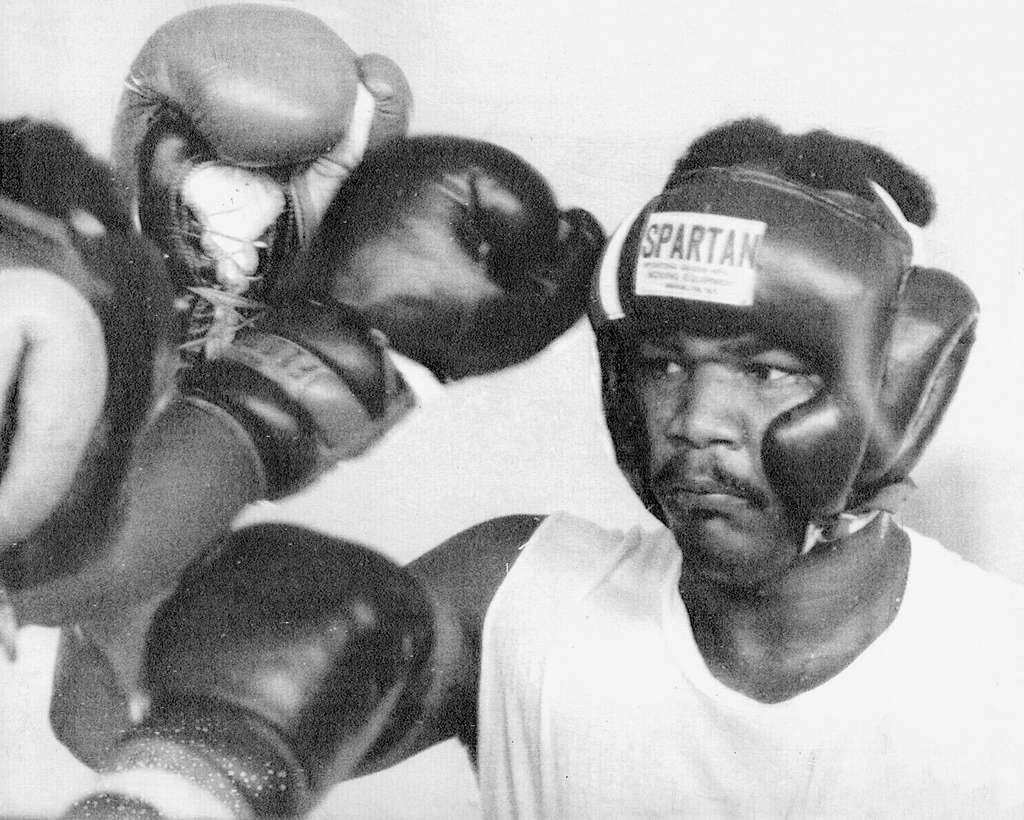
The largest single purse of his career was the $5 million he received for the Ali fight — promoter Don King’s then-unprecedented $10 million split between the two fighters (Foreman and Ali received $5 million each). At the time, that was one of the largest individual payouts in sports history. To put it in current money, $5 million in 1974 is roughly equivalent to $32 million in 2025 dollars.
Foreman retired in 1977 after losing to Jimmy Young in Puerto Rico, became an ordained Christian minister in Houston, and stayed away from the ring for a decade. The comeback announced in 1987 was driven, by his own account, by the need to fund the youth centre he had founded in Houston — the initial earnings from his boxing career had largely gone into the centre and were close to depleted. He returned at age 38, weighing 267lb, to widespread scepticism. By 1994, at age 45, he had won the WBA, IBF and lineal heavyweight titles by knocking out 26-year-old Michael Moorer.
His total estimated career earnings from boxing — across both phases, including the Frazier fights, the Ali fight, the Holyfield fight, the comeback campaign and the Moorer title win — sit in the range of $30-50 million in nominal dollars. Significant. But not, as it turned out, where the real money was.
The Phone Call That Built a Fortune
In 1994 — the same year Foreman regained the heavyweight title — a small Illinois company called Salton, Inc. was looking for a celebrity endorser for a new countertop grilling product. The grill itself had been invented by Michael Boehm of Batavia, Illinois, with engineering work by Bob Johnson. Boehm had originally pitched the product as “The Fajita Express” — a slanted-surface, dual-sided grill designed to drain fat away from food while cooking both sides simultaneously. The fajita angle had garnered little interest at trade shows in the early 1990s.
Salton’s first choice for the celebrity tie-up was not George Foreman. It was Hulk Hogan. Hogan’s agent presented him with two endorsement options: a grill, or a meatball maker. Hogan, by his own later admission, picked the meatball maker. The grill went down the list.
Salton then sent samples to George Foreman through his colleagues. Foreman, after consulting with his wife, agreed to attach his name to the product. The original 1994 endorsement deal compensated Foreman through royalties — approximately 40% of the profits on each grill sold. No upfront fee of any meaningful size. No salary. Just royalties.
This is the structural decision that turned a marketing endorsement into one of the most lucrative private licensing deals in American commercial history.
The Royalty Math
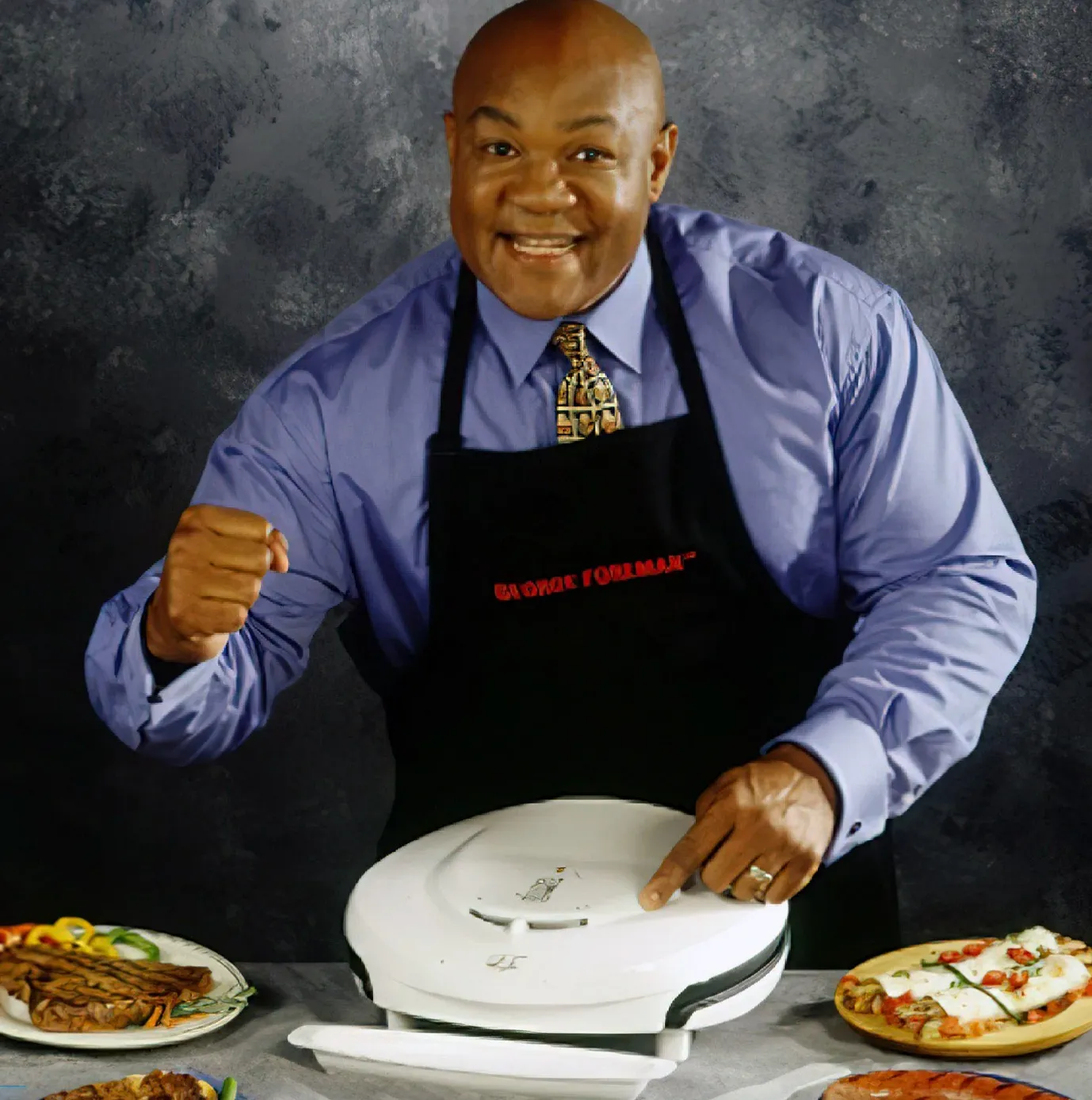
By 1996, the grill was generating $5 million in revenue. By 1998, sales had reached $200 million annually, accounting for roughly 37% of Salton, Inc.’s entire revenue. Foreman’s 40% royalty share at this peak was producing personal income of $4.5 million per month — and at the absolute peak of the cycle, by Foreman’s own later account to AARP, $8 million per month.
A boxer who had once received $1 million for losing the Rumble in the Jungle was now earning that figure every four days, in his sleep, from a kitchen appliance.
The cumulative implication of the royalty structure was so favourable to Foreman that Salton concluded it was cheaper to buy him out entirely than to keep paying him.
The 1999 Buyout — Foreman’s Real Payday
In 1999, Salton, Inc. agreed to acquire the perpetual rights to use Foreman’s name, image and likeness on food preparation appliances. The headline figure: $137.5 million, structured as $127 million in cash plus $10 million in Salton stock. The deal was structured as a long-term capital gain for tax purposes — Foreman received approximately 75% of the payout, with the remaining 25% going to his business partners on the original endorsement deal.
This is where the structure of the deal becomes important for any reader thinking about personal brand economics. Foreman did not stop earning when the buyout closed. The buyout extinguished Salton’s obligation to pay running royalties — but Foreman retained his stock position and continued to receive revenue from grills sold under his name through subsequent product extensions and indoor/outdoor grill variants.
By the time the cumulative earnings were tallied — royalty income from 1994-1999, the $137.5 million buyout, plus continuing income from product extensions through to the late 2010s — Foreman’s total compensation from the grill is conservatively estimated at $200-250 million, with Foreman himself telling AARP in 2014 he had made “much more” than $200 million.
The grill has sold over 100 million units worldwide since launch.
The Lesson for Personal Brand Economics
Three principles from the Foreman case study are worth burning into the playbook for any entrepreneur, athlete, executive or public figure with monetisable name recognition:
First, the royalty structure was the entire game. A typical celebrity endorsement deal in the mid-1990s was a flat fee — $500,000 to $5 million for a multi-year usage agreement. Foreman’s team agreed to forgo the upfront in exchange for a percentage of profits. That single negotiating decision was the difference between earning $5 million and earning $250 million. The same structural lesson applies to any modern equivalent: equity over fee, royalty over flat, perpetuity over time-bound.
Second, the credibility match mattered more than the celebrity wattage. Hulk Hogan in 1994 was probably better known globally than George Foreman. He could not have sold a fat-reducing grill credibly. Foreman could, because he visibly looked like a man who would actually use it, and his post-religious-conversion warmth made him a believable kitchen presence. The right celebrity for a product is not the most famous one — it is the one whose personal brand confirms the product’s promise. Salton picked correctly, eventually, almost by accident.
Third, the buyout structure protected both sides. By 1999, Foreman’s royalty stream was eating a large enough share of Salton’s profits that the company had a structural incentive to either renegotiate or exit the relationship. The $137.5 million buyout converted future variable royalty risk into a fixed lump sum for Salton, while crystallising a vast capital gain for Foreman at a favourable tax treatment. Both sides benefited from a clean transition. The deal continues to be cited in licensing-agreement teaching materials at major business schools because it represents an ideal endgame for a successful long-term endorsement.
The European Read
For European business readers, the Foreman case study has a specific contemporary relevance. The continent has produced multiple world-class athletes, designers, chefs and entertainers in the past two decades whose personal brand economics are roughly where George Foreman’s were in 1993 — significant fame, modest licensing income, no structural endorsement deal that compounds. Italian football managers, French luxury chefs, German engineering executives, British sporting figures: most are leaving multiples of their lifetime earnings on the table by accepting flat-fee endorsements rather than royalty-based licensing. The Foreman model is replicable in any category where the celebrity’s credibility genuinely improves the product’s commercial performance.
George Foreman died on 21 March 2025, at the age of 76, having earned more from a grilling appliance than the combined sum of every world heavyweight champion in history earned from boxing through the 1970s. The boxing made him famous. The licensing made him rich.
The phone call to Hulk Hogan made it all possible.
Related Analysis

