





EBM NEWSDESK ANALYSIS-Nick Staunton, Editor-in-Chief
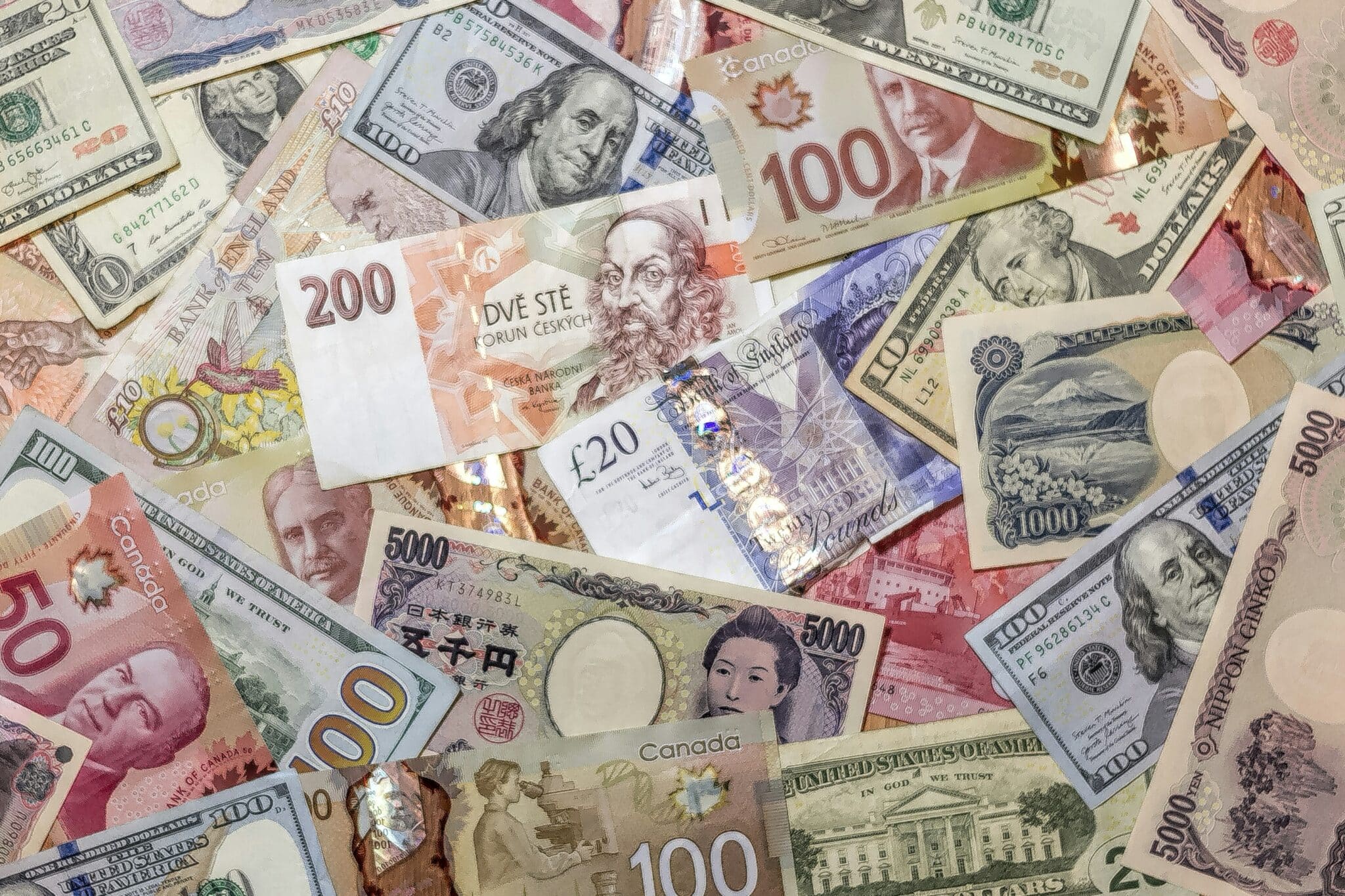
Czech President Petr Pavel has urged the Czech Republic to move toward adopting the euro, putting him on a potential collision course with Prime Minister Andrej Babiš’s new government, which has ruled out joining the single currency.
Speaking at the ReVize Česka conference in Prague last week, Pavel delivered his most direct statement yet on the currency question — one that has divided Czech politics for two decades. “The fact alone that our economy is significantly interwoven with the eurozone should lead us to tell ourselves that in this case it is better to sit at the table where decisions are made, rather than sit behind the door and then deal with these decisions,” Pavel said.
The remarks place the Czech presidency in direct conflict with the Babiš administration on one of the most consequential economic policy questions facing Central Europe. The collision is not merely political. It carries material economic implications for a country whose export dependency on the eurozone makes its currency independence increasingly difficult to justify on purely commercial grounds.
Join The European Business Briefing
New subscribers this quarter are entered into a draw to win a Rolex Submariner. Join 40,000+ founders, investors and executives who read EBM every day.
SubscribeThe Economic Case Pavel Is Making
The structural argument for Czech euro adoption is not new — but it is strengthening. The Czech economy sends approximately 84% of its exports to EU member states, with Germany alone accounting for roughly a third of total export revenue. The koruna’s value is effectively shadow-managed in response to ECB policy regardless of what the Czech National Bank formally decides, because the underlying economy has no meaningful buffer against eurozone monetary conditions.
Pavel also noted that the Czech Republic’s absence from Euro Summit meetings — where eurozone leaders discuss issues affecting the currency area — leaves Prague outside key debates despite the country’s deep economic links with the bloc. The practical consequence is that Czech businesses, operating predominantly in euros for their largest commercial relationships, bear currency conversion costs and hedging expenses that their German, French and Austrian competitors do not.
On the positive side of the ledger, the Czech government’s own National Economic Council has highlighted that the euro could reduce inflation and lower long-term prices due to increased market competition, making price comparisons easier and creating downward pressure on goods that currently cost more in Czechia than in neighbouring eurozone states. For a country where the cost-of-living gap with Western Europe remains a persistent political grievance, that is not a trivial consideration.
The Case Against — and Who Is Making It
The opposition to euro adoption in Prague is real, institutionally embedded and politically powerful. The euro is opposed by the sitting governor of the Czech National Bank, Aleš Michl — an ex-aide of Babiš — who said in response to Pavel’s earlier comments that adopting the euro is “no salvation” for the crawling progress in the country’s economic convergence with Western European states.
The government’s own National Economic Council has cautioned that joining the eurozone would mean Czechia would lose control over its national interest rates and monetary policies, limiting its ability to address domestic economic issues. Additionally, joining the eurozone could expose Czech taxpayers to financial risks if weaker member states require bailout support.
In April 2025, the Ministry of Finance and the CNB formally recommended that the Czech government not set a target date for euro area entry, with the next assessment not due until March 2030. The institutional position, in other words, is deliberate delay — and the Babiš government has no intention of departing from it.
Pavel criticised the domestic political climate around the euro directly, saying Czech society has avoided a serious discussion about the advantages and disadvantages of adopting the common currency, and that public scepticism is often reinforced by politicians who deliberately encourage negative attitudes toward the euro.
The Public Opinion Problem
The political resistance is not manufactured from thin air. A public opinion survey in January 2025 found that just 25% of Czechs favoured adopting the euro — an increase of four percentage points from 2024, but still a clear minority. The majority of Czechs remain concerned the euro would increase costs and erode national identity.
That public scepticism reflects a genuine tension. The koruna has served Czechia well during periods of external shock — the 2008 financial crisis, the post-Covid inflation surge — precisely because monetary independence allowed the CNB to act faster and more decisively than eurozone membership would have permitted. The institutional memory of that flexibility is deeply embedded in Czech economic culture, and no presidential speech alone will dislodge it.
The question is whether that memory is becoming a liability. Currency independence provides flexibility — but it also imposes costs that compound quietly over time: hedging expenses, borrowing premiums, exclusion from Euro Summit deliberations, and the structural disadvantage of negotiating trade and investment terms from outside the currency bloc that determines the conditions for 84% of your exports.
The Verdict
President Pavel is making an argument that the economic data broadly supports and that Czech political reality currently makes impossible to act on. The Babiš government is against it. The central bank governor is against it. Three in four Czech citizens are against it. And the next formal institutional review of the question is not scheduled until 2030.
What Pavel is doing — and what makes his remarks commercially significant beyond the immediate political theatre — is reframing the question. The debate in Prague has historically been conducted around what Czechia would give up by joining the euro. Pavel is insisting it be conducted around what Czechia is losing by staying out.
As we examined in our coverage of how the EU’s competitiveness drive is reshaping European economic strategy, the countries best positioned for the next economic cycle are those embedded in the decision-making structures of the bloc’s core — not those watching from adjacent rooms. That is the argument Pavel is making. Whether Czech politics is ready to hear it is an entirely different question.
RELATED READS:
- Europe’s Tech Sovereignty Gamble: Can the EU Really Break Free From Silicon Valley and Shenzhen? — The EU’s push for strategic autonomy makes eurozone cohesion more commercially valuable, not less.
- Trump Moves in Hours, EU Takes Years: Why Europe Loses Trade Wars — The structural cost of being outside the EU’s core decision-making is visible in trade as clearly as it is in monetary policy.
- EU’s Competitiveness Drive Turns Green Transition on Its Head — Brussels is recalibrating economic priorities in ways that make eurozone membership increasingly consequential for peripheral economies.


