

























The internet has become quite complex over time. It has morphed into a web of good and evil. Some people are online to cause havoc to innocent internet users, resulting in a growing demand for greater online safety and anonymity. And that’s where proxies come in, particularly residential proxies. Let’s see how residential proxies work and why they are effective.
What Are Residential Proxies?
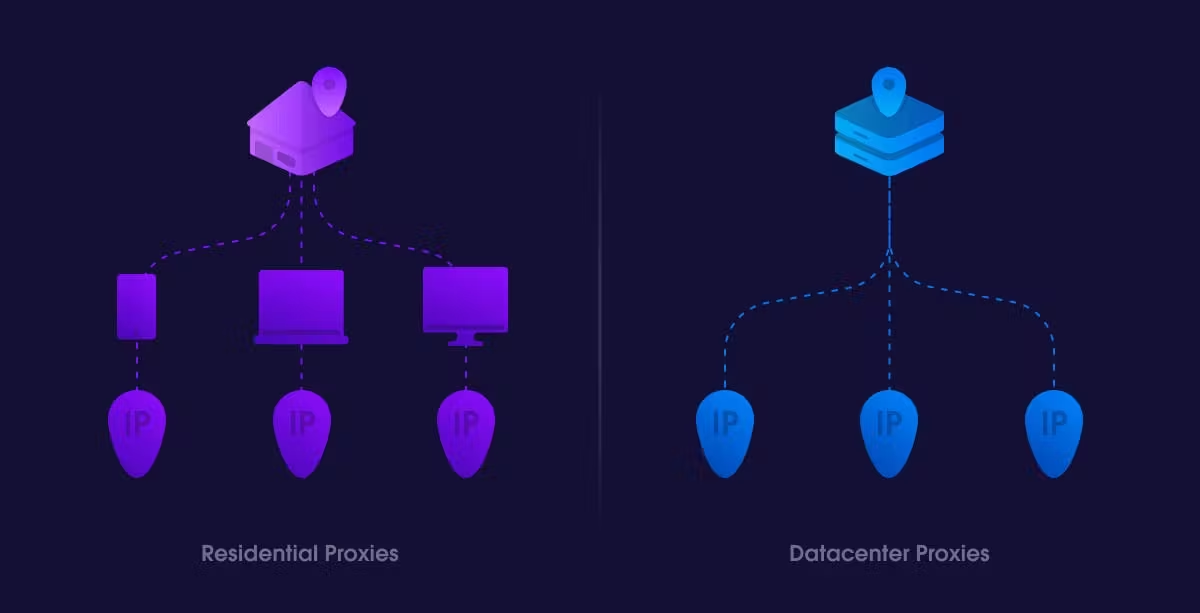
They are a type of proxy server comprising a network of legitimate user IP addresses provided by Internet Service Providers (ISPs). The server uses these addresses to make requests across the web on behalf of users.
As a result, residential proxies are not easy to detect since they represent real devices belonging to genuine internet users. Consequently, they’ve become popular, particularly when visiting websites equipped with bot-detection measures or when running tasks like web scraping, market research, or ad verification.
The Architecture of Residential Proxies
To better understand how this technology achieves its privacy-boosting effect, it’s crucial to take a look at its components. The following are the fundamental constituents that make up the architecture of these tools.
1. Proxy Network
The beauty of residential proxies is their network, which comprises thousands, and in some cases millions, of IP addresses. Because each IP address belongs to real user devices, they come off as traffic that easily passes authenticity tests. Residential proxy services are a product of complex processes condensed into simple services served to users through downloadable apps or software.
How are proxy vendors able to build such a massive web of IP addresses? These often are a result of an agreement between users interested in “renting” their IP addresses for a small fee and the vendors themselves, who go through all the work of establishing this vast network. This mechanic makes it possible for these proxy sellers to marshal such a humongous database of IP addresses worldwide.
2. Proxy Servers
Proxy servers act as an intermediary between your device and the complex world of the internet. These servers handle your requests on your behalf and send you back the response while keeping your IP address hidden. Additionally, they handle a large amount of requests simultaneously. For smooth operations, they leverage load balancing, which helps distribute traffic across an entire network. This prevents server overloads and facilitates fast and reliable performance.
3. IP Rotation
Proxies often provide the option to dynamically change IP addresses, which can help give the impression of different website users. This is particularly beneficial when conducting web scraping or market research, both tasks that demand multiple data requests online. Rotating residential proxies that you should try offer this functionality, making it difficult to detect that it’s the same person making the requests. The IP rotation makes it difficult to detect that it’s the same person making the requests.
4. Geo-Targeting
Besides mimicking a legitimate user from a random global location, residential proxies allow you to browse the internet as if you are located in a different country, making it possible for you to access geo-restricted content. Geo-targeting is widely used by businesses interested in running localized market research in other regions accurately.
How Residential Proxies Function
Now that we have familiarity with the architecture behind these network systems, it’s time to move on to how they work. Here are a few notable processes involved in residential proxies:
- User Request
To begin with, the proxy handles all your requests to online services and websites. They do so by using a residential IP address that’s different from yours.
- IP Masking
Throughout your browsing process, your real IP address remains hidden. These tools use a random IP address from their network to send requests like a real user from a location of your choice. This is what makes it easier to bypass firewalls, maintain anonymity, and evade IP flagging and possible banning.
- Rotating IPs
Whenever you make multiple requests on a website, the proxy server continually changes the IP addresses making the requests. This rotation feature mimics different users making different requests.
- Receiving Data
A proxy server sends a request using a random IP address on your behalf. Then, the website processes the request and sends a response back to the proxy server, which then forwards the response to you.
Conclusion
Residential proxies have become a notable option for businesses and individuals seeking online anonymity and safety, access to geo-restricted content, and enhanced data request capabilities. Getting a good understanding of how this technology works makes it easier for you to realize why they are very effective and when to use them.
Still on the fence about residential proxies? You can visit this link to check for more information about how tapping into these tools yields astounding results for those looking to enhance their security online.