
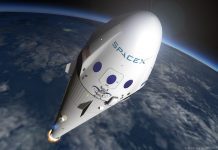

























Quick Answer -Elon Musk has spent years resisting the public markets, citing the short-termism of quarterly reporting and the distraction of shareholder pressure on companies trying to do things that take decades. That resistance is over. SpaceX is preparing to file its IPO prospectus with the SEC as early as this week, targeting a June listing and a valuation of more than $1.75 trillion — a figure that would make it the most valuable company ever to go public, and the sixth most valuable publicly traded entity on earth.
Advisers involved in the process expect the offering to raise more than $75 billion, dwarfing the previous record set by Saudi Aramco’s $29.4 billion listing in 2019. At $1.75 trillion, SpaceX would sit above every S&P 500 company bar Nvidia, Apple, Alphabet, Microsoft and Amazon — and comfortably above Musk’s own Tesla.
The number has been climbing fast. In January the target was $1.5 trillion. It rose following the February all-stock merger with xAI, Musk’s artificial intelligence venture, which valued the combined entity at $1.25 trillion. The merger represents a fundamental shift in SpaceX’s architecture — pivoting toward orbital data centres that integrate Starlink’s global satellite mesh with xAI’s large language models, moving massive compute workloads into space to exploit constant solar energy and natural radiative cooling. The $1.75 trillion figure is the market’s best current estimate of what that combined vision is worth.
Join The European Business Briefing
New subscribers this quarter are entered into a draw to win a Rolex Submariner. Join 40,000+ founders, investors and executives who read EBM every day.
SubscribeThe commercial engine is Starlink. By the end of 2025 it had amassed 9.2 million active subscribers, doubling its user base in just 15 months and generating over $10 billion in revenue — with analysts projecting that figure could reach $24 billion in 2026. SpaceX has built the dominant position in commercial launch through two decades of reusable rocket development, controlling the economics of reaching orbit in a way no competitor comes close to matching. The company holds over 95% of the domestic US launch market and more than $22 billion in active government contracts.
But Starlink alone does not justify $1.75 trillion. Institutional investors are being asked to price three businesses simultaneously: an aerospace infrastructure company with unmatched launch economics, a global connectivity platform with high-margin recurring revenues, and an orbital AI computing play that cannot be replicated by any ground-based competitor. The race to dominate AI infrastructure has already seen one major investor stake $64 billion on a single AI company — and SpaceX-xAI is positioning itself as the next gravitational centre of that capital.
A successful late-March Starship test flight — orbital mission plus booster catch — is considered the final technical proof point required to lock in institutional backing at the target valuation. Musk’s rocket programme and his stock market ambitions are on the same countdown clock.
The risks are substantial. xAI operates at a loss. Musk’s overlapping roles across Tesla, X and SpaceX raise governance questions that public shareholders will press hard. Sky-high AI valuations are already drawing serious scrutiny from investors asking whether the next decade of growth has already been priced in. The regulatory framework for orbital AI infrastructure does not yet exist. And this IPO is being assembled in the middle of an energy shock that has already pushed oil above $100 and rattled global business confidence — a difficult backdrop in which to ask for $75 billion.
For scale: Revolut’s anticipated £60 billion London float would be among the largest listings in LSE history. SpaceX at $1.75 trillion makes that look like a warm-up act. Meanwhile Wall Street is simultaneously restructuring its settlement infrastructure around blockchain rails — meaning the financial system SpaceX will list into is itself undergoing its most radical transformation in decades.
When the prospectus is filed — using a confidential SEC process that allows companies to work through complex disclosures privately before the public roadshow begins — it will be the most closely read document on Wall Street in years. The question when investors finally see the full picture is whether $1.75 trillion, right now, in the middle of a global energy shock, is a price the market is prepared to pay for the most audacious corporate vision of the century.