























NBA superstar LeBron James’ initial $6.5 million investment in Premier League club Liverpool FC has delivered a striking return, underscoring both on‑field success and shrewd capital deployment.
Acquired in 2011, the stake now forms part of a far broader portfolio through the club’s parent company, highlighting the growing convergence of sport, business, and global investment strategy.
A Strategic Entry: $6.5 Million for 2 %
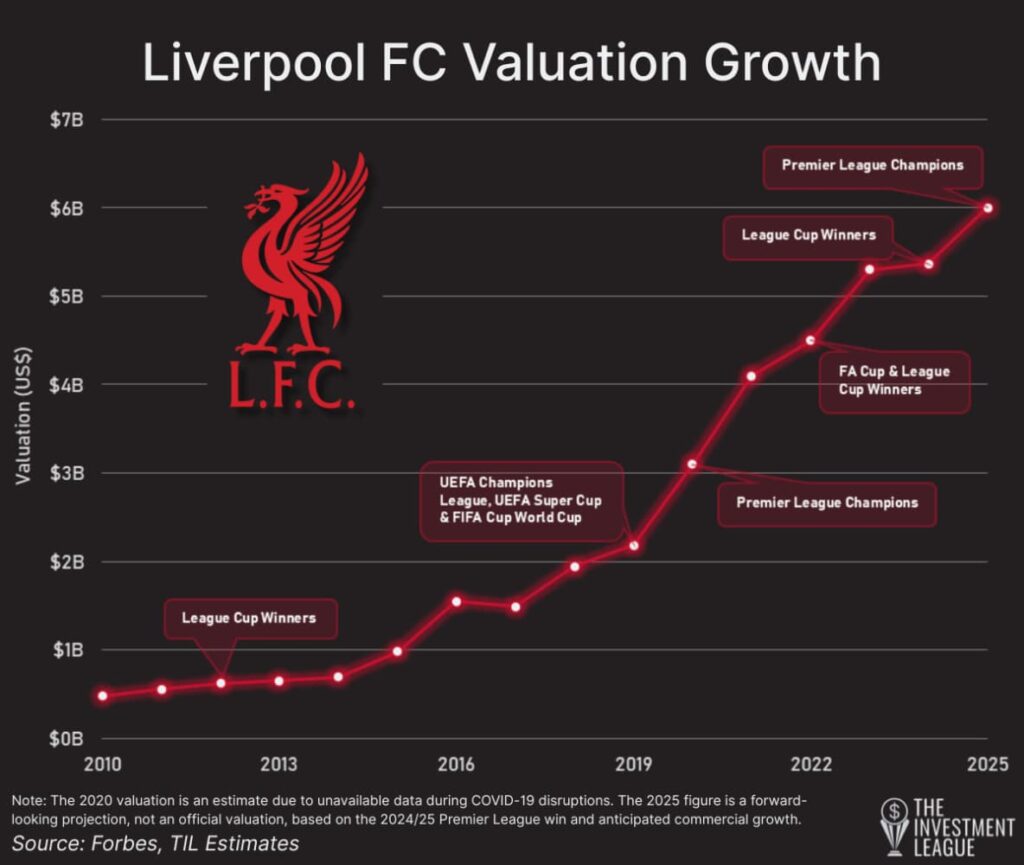
James’ involvement with Liverpool began in 2011 when he acquired a 2 % minority stake in the club. At that time, Forbes estimated Liverpool’s value around $552 million — but James’ contribution implied an effective valuation closer to $325 million.
Because James provided marketing reach, global celebrity and brand alignment, his entry into the club’s shareholding was partly strategic, bridging elite sport and international corporate expansion.
For investors and observers in the sports-business world, this transaction underscores how sports franchises and investment strategy are increasingly entwined with branding, media and alternative asset growth.
From Club Stake to Broader Portfolio Value
In 2021, James transformed his direct Liverpool stake into a broader ownership position: a 1 % holding in Fenway Sports Group (FSG), Liverpool’s parent company. By that point, FSG included major assets such as the Boston Red Sox and Pittsburgh Penguins, signalling a diversification beyond football.
According to Forbes, FSG was valued at $12.95 billion in 2024 — implying James’ 1 % stake was worth around $129.5 million. That represents nearly a 20-fold increase on his original $6.5 million outlay in less than 15 years. For high-net-worth individuals and family-office investors, James’ move offers a clear case study of alternative-asset growth and global FDI in sport.
What Drove the Upside for Liverpool’s Valuation?
Liverpool’s rise in value — and by extension James’ return — rests on multiple factors:
-
On-pitch success, including a 20th Premier League title in April 2025.
-
Strong commercial performance: in 2024, Liverpool generated $719 million in revenue, while operating income reached $102 million.
-
A low debt-to-value ratio of just 3 %, underlining corporate discipline.
-
Expanding global brand, fan engagement and media reach across Asia, North America and beyond.
These elements create classic drivers for premium asset valuations and speak to themes in global markets and franchise investment.
Risks, Caveats and the Road Ahead
Of course, any sports-asset investment carries caveats:
-
The $6 billion valuation of Liverpool remains a projection, not an official sale price.
-
Minor-stake investments often lack liquidity — converting the value into cash may take strategic exit events.
-
The sports-investment space is increasingly competitive; many athletes and celebrities have followed James’ lead into football clubs or franchises.
-
Broader economic or regulatory shocks — from broadcasting rights to global travel disruptions — could impact valuations.
For investors focused on corporate strategy and brand expansion through sport, James’ case remains a valuable benchmark rather than a guaranteed template.
Why It Matters Beyond Sport
James’ investment isn’t just a winsome anecdote. It exemplifies how sports leagues, brands and global capital have converged. For business schools, private-equity teams and global fund managers, the tie-up between celebrity equity, alternative assets and global brand building opens new strategic lenses.
In the context of Europe — where football remains a commercial powerhouse — the story aligns with broader themes of cross-border investment, media rights and asset scaling. As more capital flows into sport, the valuations and exit strategies of clubs will matter ever more in global portfolios.
Final Take
LeBron James’ early bet on Liverpool has turned into far more than a fan investment: it now sits at the crossroads of sport, media and global asset strategy. From $6.5 million to an estimated stake worth well in excess of $100 million, the journey highlights how timing, brand integration and commercial growth can align to deliver outsized returns.
For athletes looking to transform fame into diversified assets — or for investors eyeing sport as an alternative growth engine — this case offers a practical blueprint. And for the broader corporate world, it reminds us that even a sports club can become a serious business-investment vehicle.