


























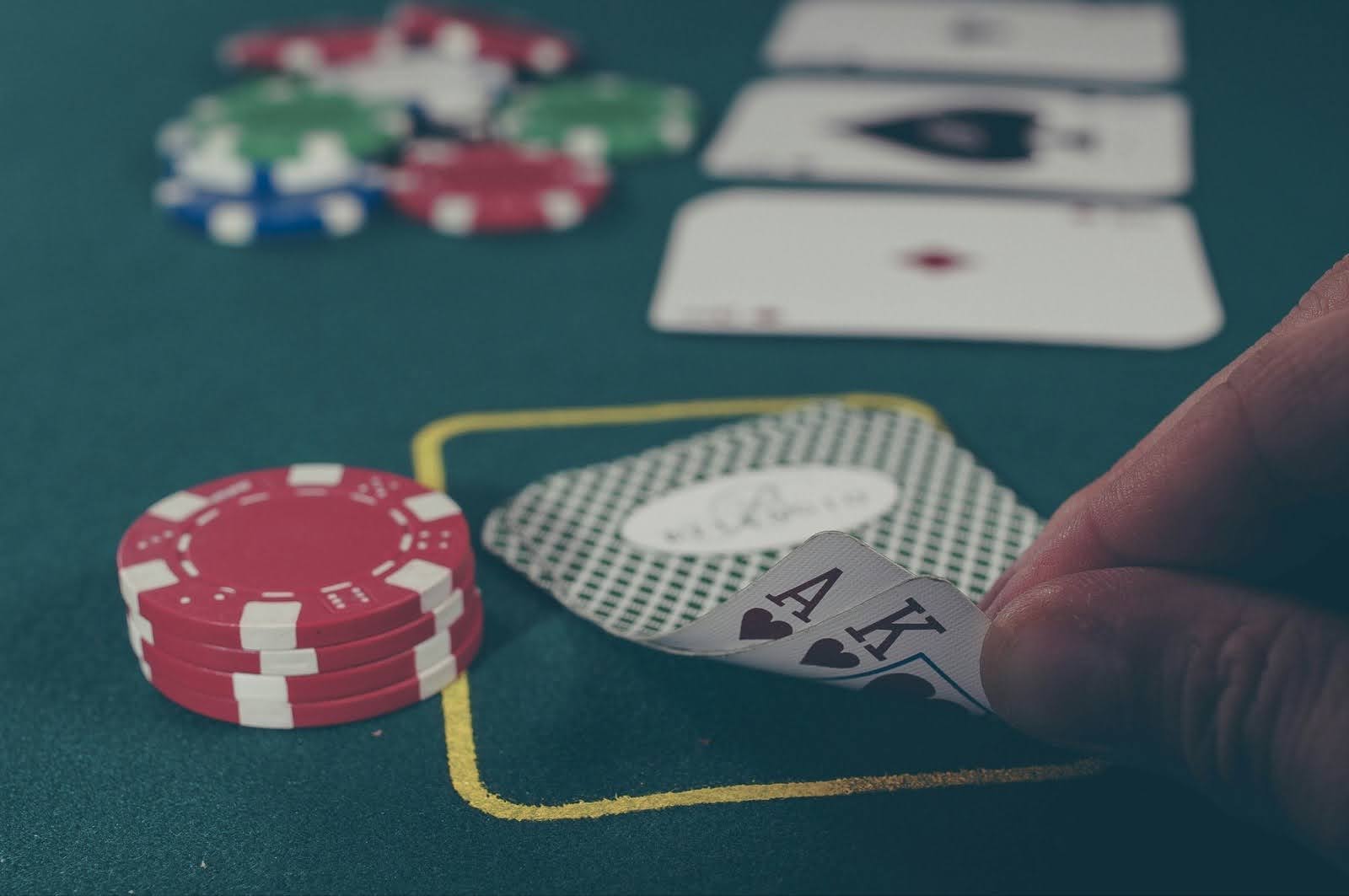
Not that long ago, say early 2000s, poker in Europe still carried a certain stereotype: dimly lit rooms, a bit of bravado, maybe a glass of something strong nearby. But, almost without much notice, some strands of poker reasoning found their way into the reasoning of modern finance. Of course, not the cards, no one is playing cards in boardrooms, but the attitude. The way uncertainty is handled. The way risk is priced, weighed, and sometimes… embraced.
When game theory leaves the casino
Pokerology as a quiet framework for decisions
Somewhere along the line, platforms like Pokerology, known for reviewing online casinos and poker environments, also began reflecting a broader interest in how the game’s logic applies beyond entertainment, including in financial decision-making.
Join The European Business Briefing
New subscribers this quarter are entered into a draw to win a Rolex Submariner. Join 40,000+ founders, investors and executives who read EBM every day.
SubscribeA 2019 study by the London School of Economics found that roughly 35% of surveyed professional traders in Europe had prior experience with regular poker play. More intriguingly, those who reported applying poker-style reasoning showed greater consistency during periods of high market volatility. Now, to be precise, no serious researcher would claim that poker turns someone into a financial genius. What it does, however, is sharpen a very particular set of instincts.
Why poker and finance share the same DNA
The overlap is less metaphorical than it seems. In fact, it is almost structural:
- Decision-making under uncertainty. In poker, you rarely have complete information. In finance, you never do.
- Risk management discipline. What poker players call bankroll management mirrors portfolio allocation strategies.
- Behavioral reading. At the table, it is about opponents. In finance, it translates into interpreting the behavior of markets, often irrational, occasionally predictable.
In finance, consequences unfold slowly, sometimes painfully so. Which makes that early training in discipline surprisingly valuable.
A generation shaped by cards
The early 2000s brought what many still call the poker boom across Europe. Online platforms exploded in popularity. Millions played. According to the European Gaming and Betting Association, by 2010, online poker had attracted over 6 million active users across Europe. Some of those players eventually moved into finance. Habits followed. And perhaps more importantly, comfort with uncertainty became second nature.
From bluffing to strategic signaling
One notion that can be carried across poker to finance, though, is that of signaling. In poker, a bet is not a bet; it is information, or even misinformation. A bluff can only work because of how other people perceive what you are doing, not due to the cards. In financial environments, similar dynamics unfold:
- A central bank announcement
- A sudden shift in asset allocation
- Even silence, at times
All of these can act as signals. And interpreting them correctly? That is where experience, sometimes oddly poker-shaped, comes into play.
The emotional edge
Here is the part that rarely gets highlighted in glossy finance reports: emotion. Poker players learn, often the hard way, about tilt, the moment when frustration overrides logic. In trading, the equivalent is well-documented. A 2021 report by the European Securities and Markets Authority noted that retail investors frequently underperform due to emotionally driven decisions, especially during downturns.
So yes, spreadsheets matter. Models matter. But emotional control? That is the quiet differentiator. In poker, losing a hand does not justify losing discipline. In finance, the same rule applies, even if it is harder to follow.
So, is poker really influencing finance?
Not in an official, codified sense. There is no poker department in major banks, no formal curriculum titled Pokerology in business schools, at least not yet. It seeps in. Through habits. Through ways of thinking. It is through the transmission of those mental models to another domain by people who carry them.
And when you carefully observe the way decisions are made when under pressure, how to deal with uncertainty, how much risk to take, or how much risk to avoid, you begin to notice something that you have seen before. A pause before action. A calculation behind the scenes. A willingness to act without perfect information. Looks a bit like poker, doesn’t it?