































 By Oleks Mykolaienko, (pictured), Founding Partner & CEO at Tallium, a software engineering and consulting company that we started back in 2012.
It’s easy to push aside strategic planning as business owners; sometimes we get so caught up in the day-to-day operations. I’ve been there, especially at the beginning of our journey.

However, over the past 5 years, we’ve embraced strategic planning to gain a clear understanding of our current position and determine the necessary steps to reach our goals. And here’s how we do it.
In this article, I’ll share the practical steps and templates that have proven successful in our company’s planning process. Whether you’re initiating planning for the first time or looking to optimize your existing approach, this guide is tailored to help you seize control of your company’s future.
Step 1. Start with Your Expectations
Join The European Business Briefing
New subscribers this quarter are entered into a draw to win a Rolex Submariner. Join 40,000+ founders, investors and executives who read EBM every day.
SubscribeThe only task that you can’t completely delegate is defining your company’s trajectory. As a business leader, you need to start with your vision first. When you clearly articulate your long-term goals and aspirations, you align your team toward a common purpose, inspire innovation, and foster a cohesive organizational culture.
So, I recommend you ask yourself these 3 questions before getting to the strategic planning:
- What are your company’s core values, long-term vision and mission?
- Where is your company now and what do you want to achieve in the next year, five years, ten years?
- Why do you need strategic planning and what do you expect from it?
These are not the easiest questions, but the answers will impact the whole strategic planning and your company’s development.
Step 2. Involve Your Team
I do believe that a journey shared is a journey won. Thus, get your leadership team on board first. Their buy-in, their understanding, and their enthusiasm are crucial for planning and executing the strategy.
When working on the strategy with your leadership team, try using the framework below. It can help you summarize your vision and show how you’ll get everyone aligned with the goals.
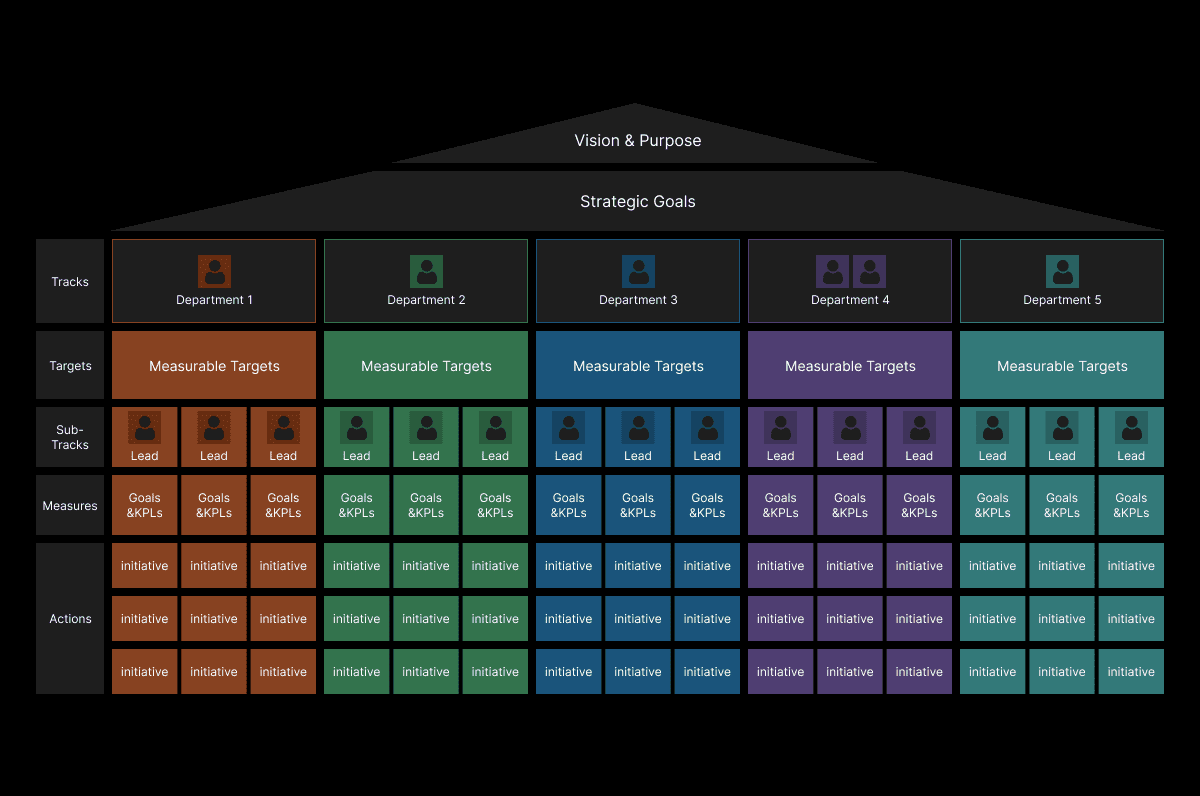
Here’s how to navigate the framework:
- Start with your vision and purpose, which serve as timeless guiding principles for your company.
- Outline the top strategic goals for the upcoming year, ensuring they align with your overarching vision.
- Break down these goals into actionable and measurable targets for each key department.
- Identify the specific teams or individuals within each department who will play crucial roles in realizing the strategic plan.
- Establish clear goals and KPIs, while outlining specific initiatives tailored to each team.
When developing initiatives, it’s essential to make them SMART (Specific, Measurable, Achievable, Relevant, Time-bound). Additionally, clearly define ownership and accountability for each task, ensuring everyone knows their role in the puzzle.
A simple and effective template for structuring your initiatives could look like the one provided below.
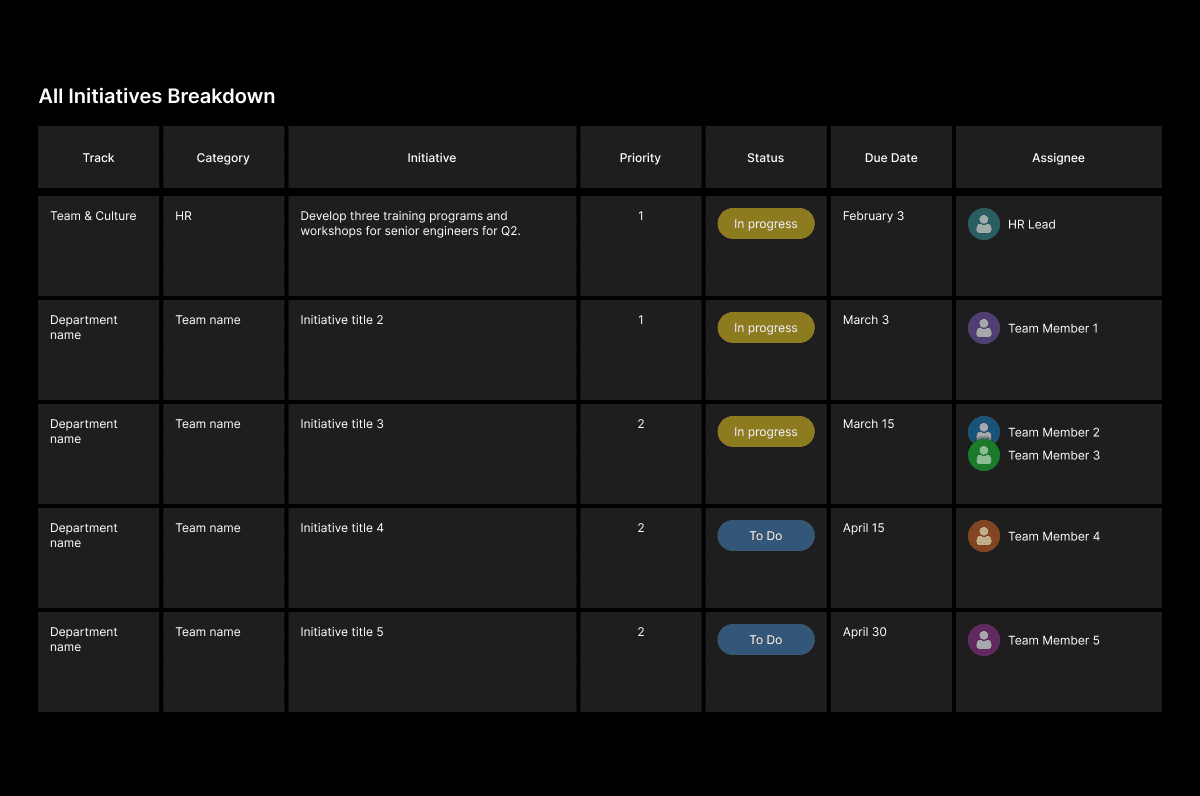
Once you’ve finished the brainstorming sessions and filled in the templates with your team, you’ll have a solid plan for the next year. While it may seem like a quick exercise, in reality, it involves understanding the market and target audience, evaluating your position, identifying opportunities, and assessing potential threats. It’s essential to consider external factors and thoroughly evaluate your available resources. Otherwise, planning in isolation can lead to ineffective strategies.
Step 3. Monitor and Adapt
Now that you outlined your strategy and the action plan, it’s time for the hardest part – making sure you execute it. At our company, we prefer to dedicate one day each quarter to a series of strategic workshops. Here’s what they cover:
- Begin by reviewing your quarterly goals. This includes providing each department head with the opportunity to report on progress, highlight achievements, and identify any obstacles they may be facing.
- Go through your vision and strategic goals to ensure they remain unaffected by external factors. It’s also important to evaluate your strengths and weaknesses to ensure you have the necessary resources and opportunities to reach your goals.
- Update your list of initiatives. It’s perfectly fine to re-prioritize, remove, or add items as circumstances evolve and we need to adapt to the changing world.
It’s just one day out of 63 working days in the quarter, and it’s definitely worth it. Your team is aligned, you understand your company’s situation, and you can see a few steps ahead.
Extra Tips for Effective Planning
These are the insights that I find valuable and try to implement in our company:
- Just start. Get the planning process rolling even if it’s not perfect. It’s already a significant move in itself.
- Don’t hold back on your dreams — dare to dream big. By aiming high, you’re more likely to surpass expectations and achieve substantial growth. Even if you reach the middle, it’s something to celebrate.
- Involve more people in the strategic planning process. It yields valuable insights and fosters a sense of ownership among your team. It’s not just an exercise for owners and top managers but a collaborative effort.
- Don’t keep your strategy and ambitions confined within the company. Share them with your customers and partners. Transparency can garner support and alignment, while also showcasing your company’s vision.
- Balance ambition with realism. Avoid the temptation to tackle everything at once. Remember, steady progress trumps a rushed approach.
Happy sailing!
Strategic planning starts with making time for it. And it isn’t a one-time endeavor – it’s a continuous conversation within your company. Embrace the flexibility to adapt, celebrate milestones, and course-correct when needed. As Thomas Edison wisely said, “Vision without execution is hallucination.” So, don’t just dream big – take action, refine your course, and watch your vision transform into a vibrant reality. Bon voyage!






