





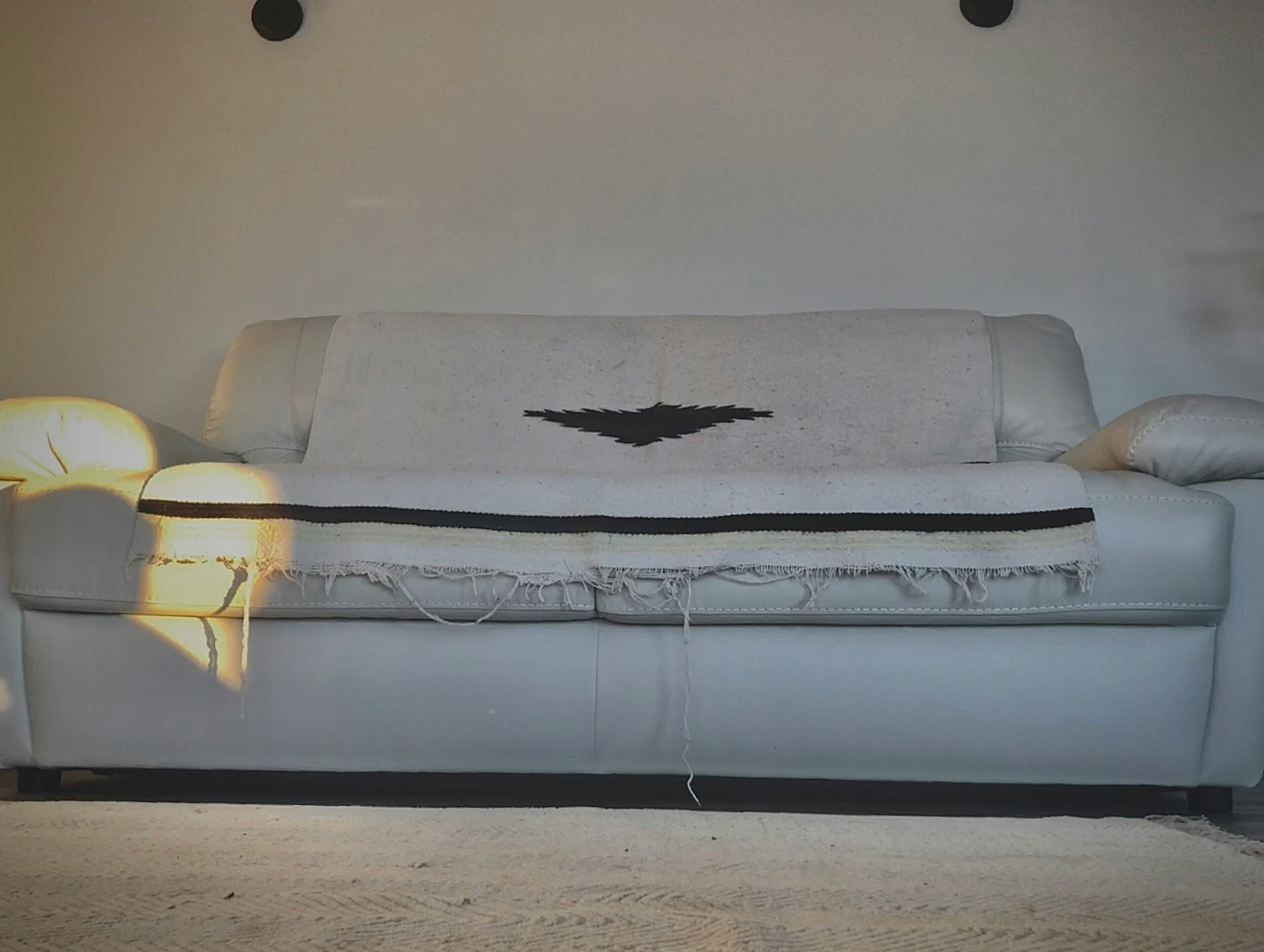
An IKEA sofa is not a temporary piece of furniture. Its frame is built to last, its modularity makes it adaptable, and its weight means most people live with it for many years. What often fails well before the frame is the upholstery. The factory fabric on most IKEA models is chosen for cost and mass production rather than for longevity or visual quality. It ages quickly, loses its texture, and starts pulling the room down with it. Most people assume that the entire sofa needs to go. In almost every case, a better decision is available: keep the frame, change the surface.
What a proper slipcover actually does to a room
A slipcover that fits properly is not something that looks like an improvisation. It looks like an upholstery choice. The difference between a well-fitted natural fabric cover and the original factory upholstery on an IKEA sofa is often striking. The factory fabric is selected to be inoffensive and generic. A natural linen cover in a considered tone reads as deliberate, as a choice made by someone who has thought about what the room should feel like rather than what the sofa was available in. That shift in perception is not cosmetic. It changes the register of the entire room. Other elements in the room, cushions, rugs, and artwork, respond to the sofa in ways they did not before. The room gains a centre that it lacked when the sofa was simply whatever it came as.
Fit is the foundation of a slipcover that works
The precision of the fit is what separates a genuinely useful slipcover from a cosmetic fix that fails within weeks. Tailored slipcovers for IKEA sofas from Norsemaison are designed to match the exact proportions of specific IKEA sofa models. This means the cover follows the geometry of the sofa rather than being stretched over it. It sits properly on the arms, lies flat across the seat cushions, and stays in place during normal use without needing to be repositioned. When a cover behaves this way, it stops being something people are aware of and becomes part of the sofa. The sofa beneath it appears designed rather than disguised, and that is a distinction that shows immediately in how the room reads. That invisibility of effort is the mark of a good fit.
Join The European Business Briefing
New subscribers this quarter are entered into a draw to win a Rolex Submariner. Join 40,000+ founders, investors and executives who read EBM every day.
SubscribeWhy linen is the material that ages in the right direction
Natural linen is the material that produces the most reliable results in this context. It has a surface texture that absorbs light rather than reflecting it, which softens the visual presence of the sofa in the room. It responds well to washing, returning to shape predictably without the stretch distortion that affects synthetic alternatives. And over time, it develops a quality that is difficult to replicate with new material: a supple, lived-in texture that makes the sofa feel like it has always been part of the room. The way linen changes with light across the course of a day also contributes to this. A linen sofa in morning light reads differently from the same sofa in evening light, and that variation gives the room a visual rhythm that manufactured uniformity cannot produce. Synthetic covers tend to move in the other direction, hardening and pilling in ways that signal age rather than character.
Natural fabric and what it means when the cover is eventually replaced
There is a broader reason to consider the choice of slipcover material carefully. The Ellen MacArthur Foundation’s principles for keeping materials in use explains that natural textile materials, such as linen and cotton, can re-enter biological cycles at the end of life in ways that synthetic materials cannot. Choosing a natural fibre cover for a sofa is therefore not just a decision about how a room looks today. It is a decision about what kind of object the sofa will be in ten years, and what will happen to the cover when it eventually needs to be replaced. The sofa frame continues. The fabric is renewed. And when the natural fabric is finished, it can return to the earth rather than accumulating as waste.
What a washable cover makes possible in daily life
Maintenance is one of the most underrated arguments for a removable slipcover. A fixed upholstery fabric cannot be fully cleaned. Surface treatments help, but the weave absorbs what the room deposits in it over months and years, and that accumulation is not recoverable through anything less than full laundering. A removable cover changes this entirely. It can be taken off, washed at home, dried and replaced. People who make this change consistently describe it as transformative: the sofa becomes an object they stop managing around and start using freely. For households with children, pets, or simply an active daily life on the sofa, this capacity to launder the sofa’s surface completely is the single change that makes the furniture genuinely usable.
Colour is a decision that shapes the room for years
The colour of the slipcover deserves as much thought as the fabric itself. The most durable choices tend to be neutral and natural: warm white, undyed linen, pale oatmeal, soft warm grey. These tones do not compete with anything else in the room. They absorb change rather than resisting it. Cushions can be updated, throws can come and go, artwork can rotate on the walls, and the sofa remains a steady foundation rather than a fixed point that other decisions have to work around. A pale, natural linen sofa can accommodate seasons, trends, and changes in personal taste without ever creating a conflict. A room built around a neutral sofa in natural linen is a room that can be adjusted indefinitely without ever feeling stuck.
The straightforward economics of covering rather than replacing
The economic argument for a quality slipcover is straightforward enough that it bears stating plainly. A new IKEA sofa costs significantly more than a fitted natural fabric cover. A well-made linen slipcover can last eight to ten years with proper care. Over that period, the sofa frame is preserved, the room retains a considered appearance, and the cost of maintaining the setup is far lower than the cost of replacement. The logic compounds: the longer a well-made frame is kept in use through quality covers, the better the return on the original purchase. This is also the logic of treating what you own with respect rather than cycling through objects that never quite satisfy before being discarded. A sofa frame that lasts twenty years with two or three slipcover changes is a sounder investment than two or three sofas bought over the same period.


