





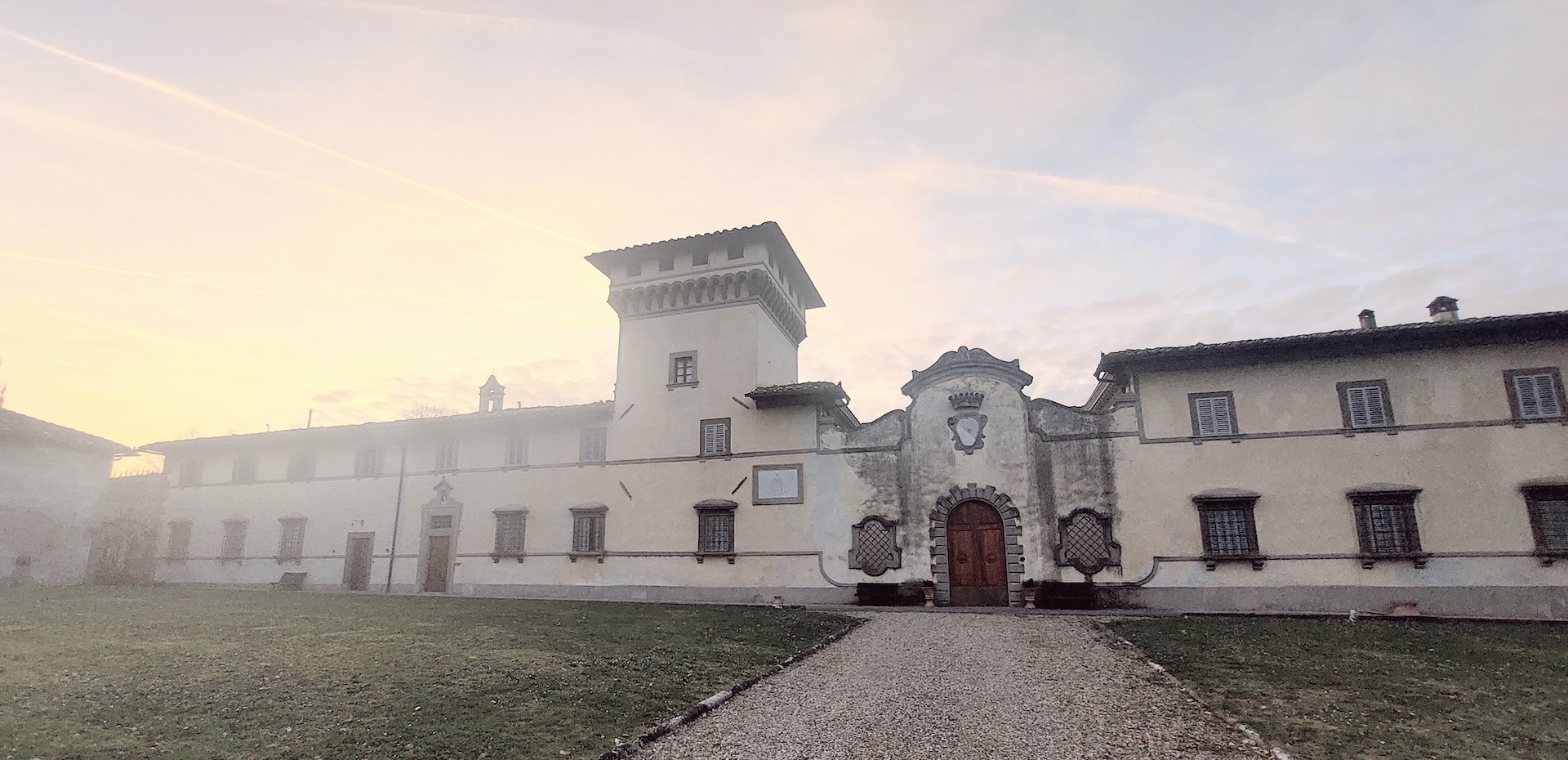
The Italian economy facing stable macro-conditions, combined with tax reforms and resilient tourism, make Italy one of Europe’s most compelling places for real-estate investment. Within Italy, Lucca and Florence stand out because of their unique historical appeal, relative affordability and strong international demand. Price forecasts suggest continued 2-4 % annual appreciation in Tuscany’s residential property market from 2026-2030, with Lucca offering 20–25 % better value, while Florence maintains the strongest appeal.
Italy’s economic and investment climate (2025-2027)
Recent forecasts from the European Commission and the Banca d’Italia project that Italian GDP will grow around 0.6-0.9 % per year through 2027, with consumption and investment supported by the EU’s post-pandemic recovery fund (NGEU – RRF). Inflation is expected to remain moderate at 1.5 % in 2025-26, rising toward 2 % in 2027. Unemployment is forecast to decline, reaching around 5.8 %–6 % by 2026–27.
Join The European Business Briefing
New subscribers this quarter are entered into a draw to win a Rolex Submariner. Join 40,000+ founders, investors and executives who read EBM every day.
Subscribe| Indicator | 2024 (estimated) | 2025 (forecast) | 2026 (forecast) | 2027 (forecast) | Sources |
| Real GDP growth | ~0.7 % | 0.6–0.7 % | 0.8–0.9 % | 0.7 % | European Commission, Banca d’Italia |
| Inflation (CPI) | ~2 % | 1.5–1.8 % | 1.5–1.6 % | 2.0 % | Banca d’Italia, ISTAT |
| Unemployment rate | 6.5 % | 6.2 % | 5.8 % | ≈6 % | ISTAT, Banca d’Italia |
| Public deficit (% GDP) | 3.4 % | 3.3 % | 2.9 % | — | European Commission |
| Key driver | RRF infrastructure investment, domestic consumption | Continued stimulus, moderating inflation | Private consumption and investment recovery | Stable growth environment |
Foreign direct investment and business climate
Italy is mostly attractive to foreign investors coming from France, the United States, Germany, the Netherlands and the UK are the largest investors. Sectors attracting investment include manufacturing, professional services and information and communication.
Residence-by-investment programmes
For non‑EU investors, the Italian Investor Visa offers a pathway to residency. To qualify, investors must place at least €250,000 in an innovative start‑up, €500,000 in an Italian company, €2 million in government bonds, or donate €1 million to public‑interest projects.
Another option is the Elective Residence Program, which grants residency to individuals with stable income from abroad who can rent or purchase property. These programmes complement Italy’s flat‑tax regime, which allows new residents to pay a fixed €100,000 annual tax on foreign income, making Italy particularly attractive to high‑net‑worth individuals.
Where to settle down: spotlight on Lucca and Florence
Lucca and Florence are jewels of Tuscany not far from Milan and Rome. Both cities benefit from being within minutes’ drive of the Tuscan coast, major airports (Florence Peretola and Pisa Galileo Galilei) and the Chianti wine region.
Lucca and Florence share a concentration of historic fabric that is irreplicable.
In Lucca town houses and apartments within the walls rent year round to professionals and to medium stay cultural tourism. On the hills and in the plain around San Concordio and Sant Anna detached villas and liberty houses respond to a different buyer with larger lots and accessory buildings.
In Florence the most resilient assets are restored apartments in historic palazzi in the Duomo Santa Croce and Oltrarno quarters plus energy efficient modern flats near tramway stops that attract students, medical staff and researchers.
In Chianti country villas with agritourism potential remain a strong niche when energy retrofits and water management are planned at acquisition stage.
From an investment perspective, these cities offer:
- Resilient tourism and rental demand: Florence recorded over 10 million tourist nights in 2024, while Lucca’s historic centre often achieved gross yields of 4–6 % and high occupancy. Student and long‑term rentals also thrive due to local universities and remote‑work expatriates.
- Relative affordability compared with Milan and Rome: Lucca’s average price per square metre (~€2,299 m²) is about half of Florence’s (~€4,546 m²).
- Limited supply and protected heritage: Both cities restrict new construction in historic centres, preserving their character. This scarcity supports price appreciation, particularly for restored palazzi and villas.
- Government incentives and tax regimes: The flat‑tax regime for new residents, reduced registration fees for primary residences and extended first‑home tax benefits through 2027 encourage foreigners to purchase property in Tuscany.
Current market data and projections for Lucca
According to the property research platform Immobiliare.it, Lucca’s average property price was €2,299 per m² in mid‑2025, up 5.8 % year‑on‑year. The Centro Storico (old town) commands €3,659 m², while suburban areas are around €1,500 m². Researchers expect 2–4 % annual price growth in Lucca during 2026–2027, with stronger gains in the historic centre due to limited inventory. Demand is driven by French, American, British and Northern European buyers, many of whom are cash buyers insulated from interest‑rate increases. Long‑term projections through 2035 suggest that if growth remains at 2‑4 % per year, prices could rise 20‑40 %. Factors supporting this outlook include Lucca’s UNESCO‑protected walls, remote‑work trends, quality healthcare and sustainability initiatives.
Property types and price ranges
| Property type | Location | Typical size | Price range (approx.) | Notes |
| Historic apartments | Centro Storico, within the walls | 80–200 m² | €280k–€800k (depending on floor and refurbishment) | High ceilings, frescoes; strong holiday rental demand; limited supply. |
| Townhouses / terraced houses | Within walls or just outside | 120–300 m² | €400k–€1.2 m | Often include courtyards or terraces; some require renovation. |
| Country villas & farmhouses | Hills around Lucca (e.g., Montecarlo, Vorno, Capannori) | 200–600 m² + land | €600k–€3 m | Vineyards or olive groves; some date from 16th–19th centuries; prime properties fetch higher prices; potential for agriturismo. |
| Modern apartments | Suburban areas and new developments | 70–150 m² | €200k–€450k | Provide parking and lifts; easier maintenance; lower rent yields but steady demand. |
Current market data and projections for Florence & Chianti
Florence remains one of Italy’s most expensive residential markets. Immobiliare.it reports an average price of €4,546 per m² in mid‑2025, with growth of 7.12 % year‑on‑year. Luxury properties appreciated 4.3 % in 2024.
Tuscany’s property research expects 1–4 % annual price growth across the region from 2026 to 2030, with Florence likely towards the upper end due to strong demand and limited supply. Investors should anticipate slower but steady gains as prices have already risen sharply post‑pandemic. Government programmes like the extended under‑36 first‑home bonus and infrastructure investments (new buses, research hubs) will support demand.
| Property type | Location | Typical size | Price range (approx.) | Characteristics |
| Historic apartments / palazzi | Florence’s historic centre (Duomo, Santa Croce, Oltrarno) | 80–250 m² | €600k–€3 m+ | Renaissance frescoes, high ceilings, often heritage‑listed; strong holiday rental yields; limited supply due to heritage restrictions. |
| Modern flats | Areas outside the centre (Novoli, Campo di Marte), new developments | 60–120 m² | €300k–€700k | Lift, parking, energy‑efficient design; appeal to families and long‑term tenants. |
| Villas & farmhouses | Chianti countryside (Impruneta, Greve, Radda) and hills south of Florence | 250–600 m² + land | €1 m–€5 m+ | Often come with vineyards or olive groves; opportunities for wine/agritourism; some date from 15th–18th centuries. |
| Palaces & prestigious residences | Fiesole, Bagno a Ripoli, or historical palazzi | 400–1,000 m² | €5 m–€15 m+ | Extraordinary architecture; targeted at ultra‑high‑net‑worth buyers; rarely available. |
Yield and income opportunities
Investors can generate income through holiday rentals, long‑term leases or agriturismo. In Lucca’s historic centre, renovated apartments achieve gross rental yields of around 4–6 %, rising to 7 % for short‑term tourist rentals during high season. In Florence, yields tend to be lower due to higher purchase prices; holiday rentals often yield 3–5 % gross, but occupancy is consistently high. Villas in the Chianti region can generate significant agritourism income through wine tastings, B&B operations and weddings. The burgeoning remote‑work trend also increases demand for long‑term furnished rentals.
Beyond real estate: investing your talent and capital in Tuscany
For foreign entrepreneurs, Tuscany offers opportunities in:
- Food and tourism: Tuscany’s hospitality sector continues to expand as visitors seek authentic experiences. Investors can develop boutique hotels, farm stays (agriturismi), cooking schools or restaurants that capitalise on local cuisine. The region’s Protected Designation of Origin (PDO) products—olive oil, Pecorino cheese, Chianti Classico wine—enhance the appeal.
- Manufacturing and cultural heritage: Lucca and Florence are centers for artisan leather goods, textiles, clothing, cosmethics making and art restoration.
- Technology and green innovation: Proximity to universities and research hubs creates opportunities in manufacturing, sustainable architecture and renewable energy. Incubators such as StartUpItalia and Lucca Innovation Hub, which support start‑ups in e‑commerce, VR/AR heritage experiences and smart agriculture help a lot.
- Wine investment potential, especially for U.S. investors: Italy is the world’s largest wine exporter: Moscato d’Asti, Pinot Grigio and Chianti Classico are amongst the best-sellers.
- Music, arts and cultural ventures: Florence and Lucca are synonymous with music and the arts. Lucca is the birthplace of composer Giacomo Puccini and hosts festivals such as Lucca Summer Festival and Lucca Comics & Games, one of Europe’s largest comic conventions. Florence hosts the world‑renowned Maggio Musicale Fiorentino festival, Pitti fashion events and countless art exhibitions. Investing in performance venues, art galleries, recording studios or co‑living spaces for artists can generate cultural and financial returns. Partnerships with local conservatories and art schools create synergy between real estate and creative industries.


