






American D2C brands are accelerating their expansion into Europe. In 2025 alone, U.S. retailers accounted for nearly 25% of new European store openings, up from 14% the year before, as brands seek growth beyond a saturated domestic market. Fashion, athleisure, and premium consumer goods have led the charge, with names like Alo Yoga, Vuori, and Lululemon establishing footholds in cities such as London, Milan, and Madrid.
Yet for many brands, international expansion exposes a difficult truth: scale is rarely constrained by demand. More often, it is limited by systems that never evolved beyond early traction.
This case study examines how NEO Innovations applied a structured, AI-assisted framework to transform a mid-seven-figure e-commerce business into a company positioned for $20 million in annual recurring revenue (ARR). The journey was not driven by a single winning ad or product iteration, but by rebuilding the growth engine itself.
Join The European Business Briefing
New subscribers this quarter are entered into a draw to win a Rolex Submariner. Join 40,000+ founders, investors and executives who read EBM every day.
SubscribeA Conversation That Connected the Dots
The foundation for this case study emerged through a direct conversation with Waleed Najam, founder of NEO Innovations. I had been following his work across the AI-driven e-commerce space for some time, through podcasts, content, strategic discussions, and his analysis of how U.S. brands must adapt when entering more disciplined markets such as the UK and Europe.
What stood out consistently was the structure of his thinking. The insights were grounded in numbers, informed by systems, and clearly designed to function across regions rather than being tied to one market’s playbook.
At the time, my own focus was shifting toward understanding the dynamics of the UK and European e-commerce landscape. While the U.S. remains the global leader in scale, European markets reward precision: tighter margins, more deliberate consumers, and far less tolerance for inefficiency. Najam’s perspective bridged that gap naturally.
During our call, he shared a recent engagement in detail, one that would later become the basis for this case study. What followed was not a highlight reel, but a methodical explanation of how a stalled brand was rebuilt from the inside out. The emphasis was clear: results were not accidental. They were engineered.
The Initial State: Revenue Without Leverage
When NEO Innovations stepped in, the brand was generating approximately $300,000 in monthly recurring revenue. On the surface, the business appeared healthy. Product-market fit existed. Paid traffic was flowing. Demand was steady.
A deeper audit, however, revealed a business operating without leverage.
The company relied almost entirely on one-time purchases. There were no subscriptions, no upsells, no cross-sells, and no adjacent product lines. Every sale had to be re-earned from scratch, placing relentless pressure on acquisition spend.
Paid advertising lacked structure. Campaigns were running, but without defined verticals, disciplined creative testing, or consistent messaging. Learning cycles were slow because results were not properly segmented or analysed.
Conversion rate optimization was weak. Pages were cluttered, load times were slow, and users were presented with too many decisions without a clear path forward.
Offers lacked clarity. There was no strong value framing, no narrative cohesion, and no strategic reason for customers to act decisively.
The brand was generating revenue, but not scalable revenue.
Phase One: The Audit Before Action
NEO Innovations began with a comprehensive audit spanning paid media, funnel architecture, customer journey, analytics, and backend operations. This step was non-negotiable.
As Najam explained, the objective was never to “fix ads first,” but to understand where the system itself was breaking under scale.
The audit prioritised systemic bottlenecks over surface-level symptoms. Key findings included wasted spend on non-converting keywords and audiences, the absence of lifecycle marketing beyond the first purchase, high bounce rates driven by poor page performance, and a complete lack of structured testing across creatives and offers.
AI-assisted analytics were used to map funnel drop-offs, identify behavioural inconsistencies, and prioritise fixes based on impact rather than intuition.
Phase Two: Rebuilding the Funnel Architecture
The first major structural change was the introduction of a Video Sales Letter (VSL).
Rather than forcing users through dense product pages, the VSL established a guided narrative, clarifying the problem, positioning the product as the solution, addressing objections, and building trust before asking for a sale.
This was supported by advertorial pages that reframed the product within an educational context, warming traffic before checkout. Simultaneously, the website experience was simplified: load times improved, visual clutter removed, and every page redesigned with a single objective, move the user forward with minimal friction.
Engagement increased immediately. Conversion efficiency followed.
Phase Three: Fixing the Offer, Not Discounting It
Instead of relying on aggressive discounts, NEO Innovations rebuilt the offer itself.
Value was reframed around outcomes rather than features. Bundling strategies were introduced, and messaging refined to emphasise clarity and relevance rather than artificial urgency.
As Najam put it during our discussion, “If your offer needs heavy discounts to convert, the issue isn’t traffic, it’s positioning.”
This shift improved perceived value without eroding margins, a critical requirement for any business aiming to scale toward $20M ARR.
Phase Four: Paid Media Reset Through Structured Testing
Paid advertising was rebuilt from the ground up.
Campaigns were reorganised into clear verticals, each targeting a specific audience, pain point, or use case. This allowed systematic testing and controlled scaling rather than broad, unfocused spending.
Creative testing became disciplined. Multiple hooks, formats, and narratives ran in parallel, with AI tools identifying early signals of creative fatigue or momentum.
On Google Ads, a deep keyword audit eliminated high-spend, low-return terms, improving ROAS through aggressive negative keyword pruning.
Shopping campaigns were restructured so top-performing products operated independently from weaker SKUs, allowing winners to scale without drag.
Phase Five: Lifecycle Marketing and Retention Systems
Email marketing was rebuilt around intent-based flows rather than static timelines.
Abandoned cart recovery, post-purchase education, and retention-focused sequences were aligned with user behaviour. These systems laid the groundwork for subscriptions, upsells, and long-term customer value, turning one-time buyers into repeat customers.
Phase Six: Influencer Strategy with Precision
Influencer marketing shifted from reach-based selection to alignment-based execution.
Creators were chosen for audience relevance and trust rather than follower count. Content was repurposed across paid channels, improving efficiency while maintaining consistency across touchpoints.
Phase Seven: AI as the Scaling Layer
AI was integrated as an enhancement layer across decision-making.
Tools were used to analyse funnel drop-offs, predict creative fatigue, optimise ad angles, and identify high-intent user segments. Rather than replacing strategy, AI reduced guesswork and compressed iteration cycles.
This allowed the brand to scale aggressively without increasing operational complexity.
Results: From Revenue to Readiness
The outcome was not merely improved performance metrics. It was a structural transformation.
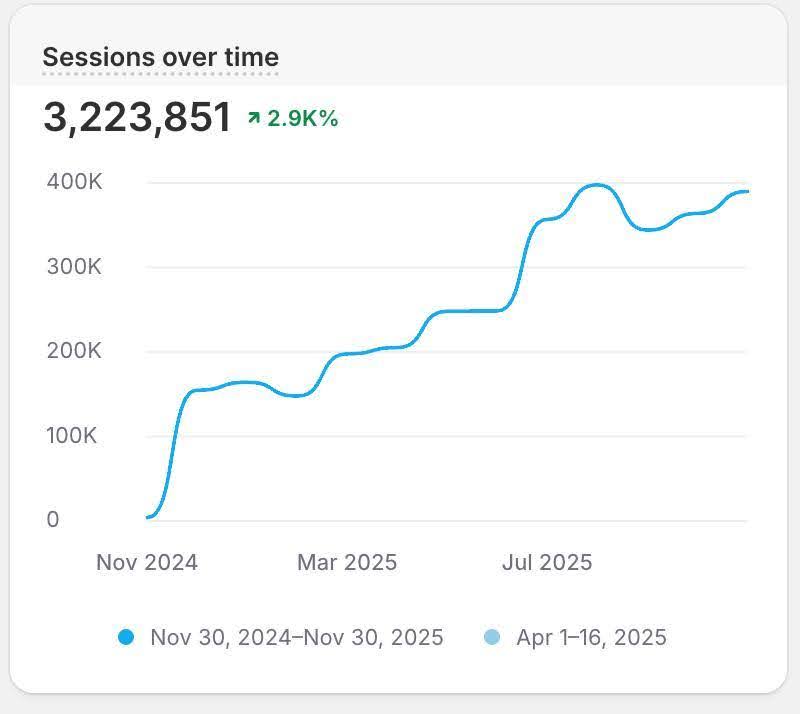
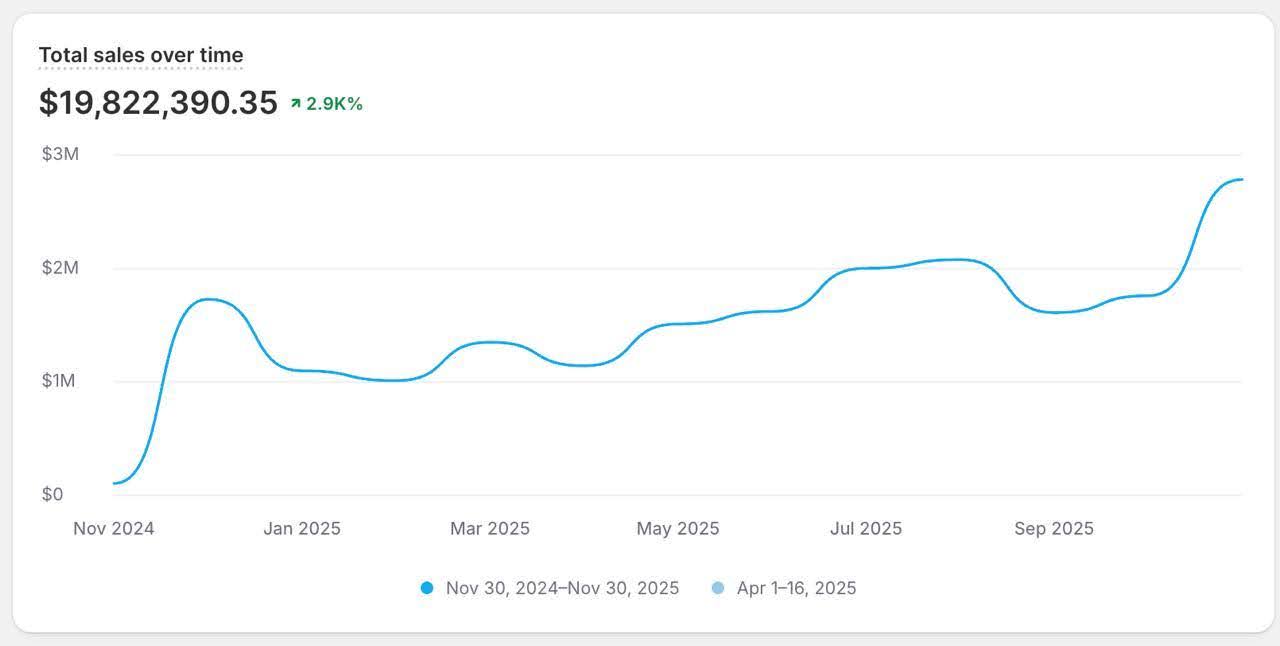
The brand evolved from a transactional business into a system designed for compounding growth. Revenue became more predictable, acquisition costs stabilised, and the infrastructure required to support $20M ARR was firmly in place.
While $20M ARR represents a trajectory rather than a moment, the systems required to sustain that scale now exist.
Conclusion
Most e-commerce brands do not fail because their products are weak. They fail because their systems never evolve beyond early-stage growth.
This case study demonstrates how NEO Innovations transformed a $300K MRR business into a brand positioned for $20M ARR by fixing fundamentals, applying AI with intent, and engineering systems designed for scale.
In a market defined by relentless competition, the brands that win are not those that do more, but those that build better.
And this is precisely where NEO Innovations, under Waleed Najam’s leadership, is redefining what scalable success looks like in modern e-commerce.
Nick Staunton
Founder & Publishing Director, European Business Magazine
Nick brings over 15 years of experience in print and digital publishing. He has developed multiple magazine brands from inception into respected industry platforms across the business and travel sectors. He oversees editorial direction, production, distribution, and talent development for European Business Magazine.
https://www.linkedin.com/in/nickstaunton/


