





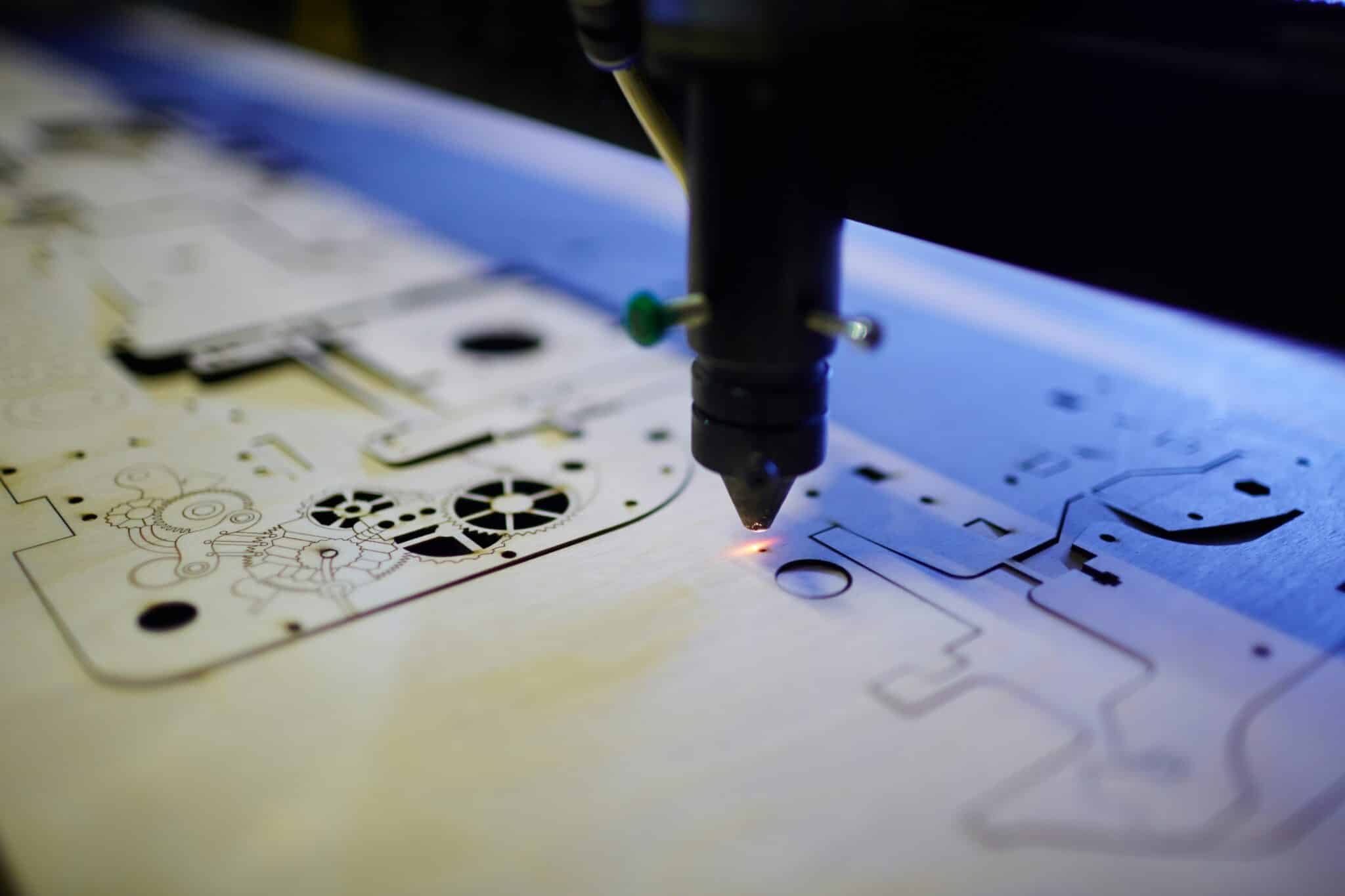
Manufacturing is evolving rapidly in 2026. Across industries such as automotive production, aerospace engineering, electronics, metal fabrication, and industrial equipment manufacturing, companies are under increasing pressure to improve productivity while maintaining high standards of precision and efficiency.
Global competition, rising labor costs, shorter production cycles, and growing demand for customized products are forcing manufacturers to rethink traditional production methods. As a result, advanced laser cutting technologies are becoming a critical part of modern industrial transformation.
Today’s manufacturers are no longer focused solely on increasing output. They are also investing in smarter, more flexible, and more automated production systems that reduce waste, improve consistency, and support long-term operational efficiency.
Join The European Business Briefing
New subscribers this quarter are entered into a draw to win a Rolex Submariner. Join 40,000+ founders, investors and executives who read EBM every day.
SubscribeAmong the technologies driving this change, advanced fiber laser systems and precision laser-guided cutting solutions are playing a central role in reshaping modern manufacturing environments.
The Growing Demand for Precision Manufacturing
Modern manufacturing requires a level of precision that traditional cutting methods often struggle to achieve consistently.
Industries such as aerospace, medical equipment, automotive components, electronics, and precision machinery rely on highly accurate processing to maintain product quality and meet strict engineering standards. Even small cutting deviations can lead to production delays, material waste, and increased operational costs.
At the same time, manufacturers are facing pressure to accelerate production while handling increasingly complex product designs. Conventional cutting processes may involve additional finishing work, slower setup times, or limitations when processing delicate materials and intricate geometries.
Advanced laser cutting technology addresses many of these challenges by providing:
- Higher cutting accuracy
- Faster production speeds
- Improved edge quality
- Reduced thermal distortion
- Lower material waste
- Better repeatability
These advantages allow manufacturers to improve both production efficiency and product consistency while reducing overall manufacturing costs.
As industrial markets continue moving toward automation and digital manufacturing, precision processing technologies are becoming essential for companies seeking long-term competitiveness.
Why Smart Factories Are Investing in Advanced Cutting Systems
The rise of smart factories is accelerating the adoption of intelligent manufacturing technologies across global industries.
Modern production facilities are increasingly integrating automation systems, robotics, digital monitoring platforms, and data-driven production management tools into their operations. In this environment, cutting equipment must be capable of operating efficiently within highly automated production workflows.
This is one reason why many manufacturers are investing in advanced OEM fiber laser cutter machine systems designed to support scalable and flexible industrial production.
Unlike older cutting technologies, modern fiber laser systems can process a wide variety of metal materials with exceptional speed and precision. These systems also integrate effectively with automated loading systems, robotic material handling equipment, and intelligent production software.
For manufacturers, the benefits extend beyond cutting performance alone. Advanced laser cutting systems help reduce labor requirements, minimize downtime, improve production consistency, and support lean manufacturing strategies.
Many factories are also adopting laser automation to address workforce challenges. As skilled labor shortages continue affecting industrial sectors worldwide, automated manufacturing equipment helps companies maintain productivity while reducing reliance on manual operations.
The ability to combine high-speed production with intelligent automation is making laser cutting technology a key component of Industry 4.0 manufacturing strategies.
How Water Jet Guided Laser Technology Improves Precision Cutting
As manufacturing applications become more advanced, industries are increasingly demanding cutting technologies capable of handling delicate materials, ultra-fine geometries, and precision-sensitive components.
This has led to growing interest in advanced water jet guided laser cutting machine solutions, which combine laser energy with water-guided technology to achieve highly precise cutting performance.
Unlike conventional laser systems, water jet guided laser technology uses a thin water jet to guide the laser beam during processing. This approach offers several important advantages for precision manufacturing applications.
First, the water stream helps reduce heat impact during cutting, minimizing thermal deformation and improving edge quality. This is especially important for industries processing sensitive materials or micro-scale components.
Second, the technology supports highly accurate cutting of complex shapes and intricate geometries that may be difficult to achieve with traditional methods.
Third, water-guided laser systems can improve processing stability when working with reflective or challenging materials, helping manufacturers achieve greater consistency across production runs.
Industries such as aerospace, semiconductor manufacturing, medical device production, precision tooling, and advanced electronics are increasingly adopting these technologies to meet growing demands for precision and reliability.
As manufacturers continue pursuing tighter tolerances and more complex product designs, advanced laser-guided cutting technologies are expected to play an even larger role in future industrial production.
The Future of Automated Industrial Production
Automation is no longer a future concept in manufacturing — it is already transforming factories worldwide.
In 2026, manufacturers are investing heavily in technologies that improve operational efficiency, reduce production costs, and support more intelligent decision-making across the factory floor.
Advanced laser cutting systems fit naturally into this transition because they offer:
- High-speed automated processing
- Real-time production integration
- Digital workflow compatibility
- Reduced maintenance requirements
- Flexible production capabilities
Modern manufacturers are also increasingly focused on sustainability and resource optimization. Laser cutting systems help support these goals by reducing material waste, lowering energy consumption, and improving production efficiency compared to many traditional processing methods.
At the same time, customization is becoming more important across industrial markets. Customers increasingly expect shorter lead times and more flexible production capabilities. Automated laser systems allow manufacturers to adapt quickly to changing production requirements without sacrificing efficiency or precision.
As global manufacturing continues evolving, companies that invest in advanced automation technologies will be better positioned to remain competitive in rapidly changing industrial markets.
Conclusion
The manufacturing industry is entering a new era defined by automation, precision, and intelligent production systems.
Advanced laser cutting technologies are helping manufacturers improve efficiency, reduce waste, and achieve the high levels of accuracy required in modern industrial applications. From scalable fiber laser systems to highly specialized water-guided laser solutions, these technologies are reshaping how products are designed and manufactured across global industries.
As smart factories continue expanding worldwide, investment in advanced cutting systems is expected to grow significantly in the coming years.
For manufacturers seeking long-term competitiveness, precision laser technology is no longer simply an equipment upgrade — it is becoming a core part of modern industrial strategy.


