





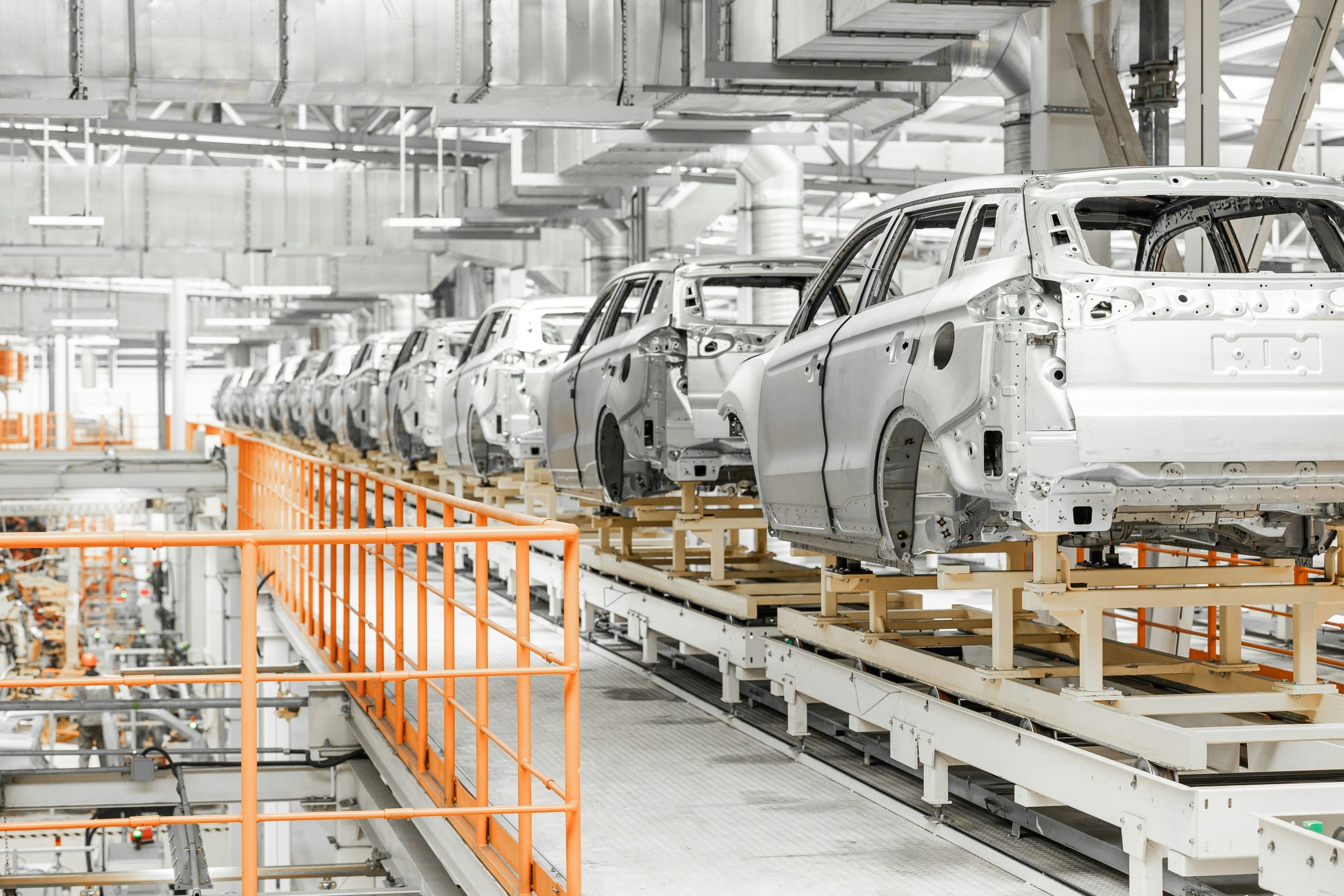
Europe’s automotive industry is once again bracing for turmoil as a deepening semiconductor shortage threatens production lines across the continent. The renewed crisis stems from supply bottlenecks at Nexperia, the Dutch chipmaker whose components are vital to European car manufacturing — from engine management and safety systems to electric-vehicle batteries and infotainment controls.
Industry executives have described the situation as “devastating,” warning that the latest disruption could derail recovery plans for an already fragile sector still battling high energy costs, weak demand, and fierce competition from Chinese EV makers.
A Familiar Weak Link
The immediate trigger lies with Nexperia’s factories in Hamburg and Manchester, which have faced persistent output constraints since late summer. Supply-chain insiders attribute the slowdown to a combination of equipment failures, labour shortages, and an acute lack of raw silicon wafers, exacerbated by rising geopolitical friction between Europe and China.
Join The European Business Briefing
New subscribers this quarter are entered into a draw to win a Rolex Submariner. Join 40,000+ founders, investors and executives who read EBM every day.
SubscribeWhile Nexperia — owned by China’s Wingtech Technology — has pledged to stabilise production by early 2026, customers have been left scrambling to secure alternatives. The company’s chips are not glamorous, but they are indispensable: tiny diodes, transistors, and power-management circuits that form the backbone of every modern vehicle.
“The shortage is hitting precisely where the industry can least afford it,” said a senior procurement officer at a leading German carmaker. “You can’t build cars without these chips — and they’re not easily replaceable. Even the smallest disruption sends shockwaves through the supply chain.”
Factories Slow, Costs Mount
Carmakers including Volkswagen, BMW, Stellantis, and Renault have reportedly begun adjusting production schedules, prioritising high-margin models while cutting shifts at plants across Germany, France, and Spain. Industry data suggests that the chip shortfall could cost the sector over €5 billion in lost output during the final quarter of 2025.
Executives are particularly frustrated that the crisis has re-emerged just as semiconductor supply had begun to normalise following the pandemic-era shortages of 2020–2022. “This feels like déjà vu,” said one executive. “We rebuilt our inventory pipelines, and now we’re right back where we started — dependent on one or two critical suppliers.”
Analysts note that Nexperia’s struggles highlight a deeper vulnerability: Europe’s continued dependence on Asia for semiconductor manufacturing. Despite Brussels’ ambitions to boost domestic chip capacity through the EU Chips Act, which aims to double the bloc’s share of global production to 20% by 2030, progress has been slow.
Strategic Dependence and Political Strain
The crisis also carries political undertones. Nexperia has faced scrutiny from European regulators over its ownership structure since acquiring the UK’s Newport Wafer Fab in 2021 — a deal that has become emblematic of the EU’s uneasy relationship with Chinese capital in strategic industries.
As the current shortage deepens, some policymakers in Brussels are calling for stronger intervention and stricter oversight. “Europe cannot continue to rely on single points of failure controlled from outside our borders,” said one EU industry official. “This is a strategic vulnerability — not just an economic one.”
The timing is particularly sensitive. European carmakers are already grappling with sluggish EV sales growth, high borrowing costs, and the aggressive expansion of low-cost Chinese competitors. The chip disruption adds another layer of risk just as the sector had hoped for stability ahead of 2026’s model launches.
Industry Scramble for Alternatives
Suppliers are racing to diversify. Continental, Bosch, and Valeo are exploring emergency sourcing deals with U.S. and South Korean chipmakers, while automakers have intensified direct procurement talks with Taiwan’s TSMC and Germany’s Infineon Technologies. Yet scaling new supply chains will take months, if not years.
“Europe’s automotive ecosystem was designed for just-in-time production — not for global semiconductor warfare,” said a Paris-based analyst. “You can’t rewire that overnight.”
The effects are already rippling through downstream sectors. Logistics firms are reporting sudden cancellations of shipments, while smaller subcontractors warn of cash-flow strains as production halts multiply.
A Wake-Up Call for Europe’s Tech Ambitions
For policymakers, the Nexperia crunch is a painful reminder of how far Europe must go to achieve technological sovereignty. The EU Chips Act, though ambitious, remains more a blueprint than a reality. Planned mega-fabs in Germany and France are years from completion, and the continent still lacks the scale and expertise of Asia’s semiconductor giants.
Until those gaps are closed, Europe’s automotive future will remain vulnerable to disruptions that can start with a single chip shortage and cascade into billions in economic losses.
As one veteran industry executive put it: “The last time this happened, it was blamed on COVID and logistics. This time, it’s structural — and that’s far more dangerous.”
For Europe’s carmakers, already fighting to reinvent themselves in an age of electrification and global competition, the lesson is unmistakable: the race to secure chips is now the race to survive.
European Business Magazine will continue to monitor the semiconductor supply chain and its impact on Europe’s industrial resilience in the months ahead.


