





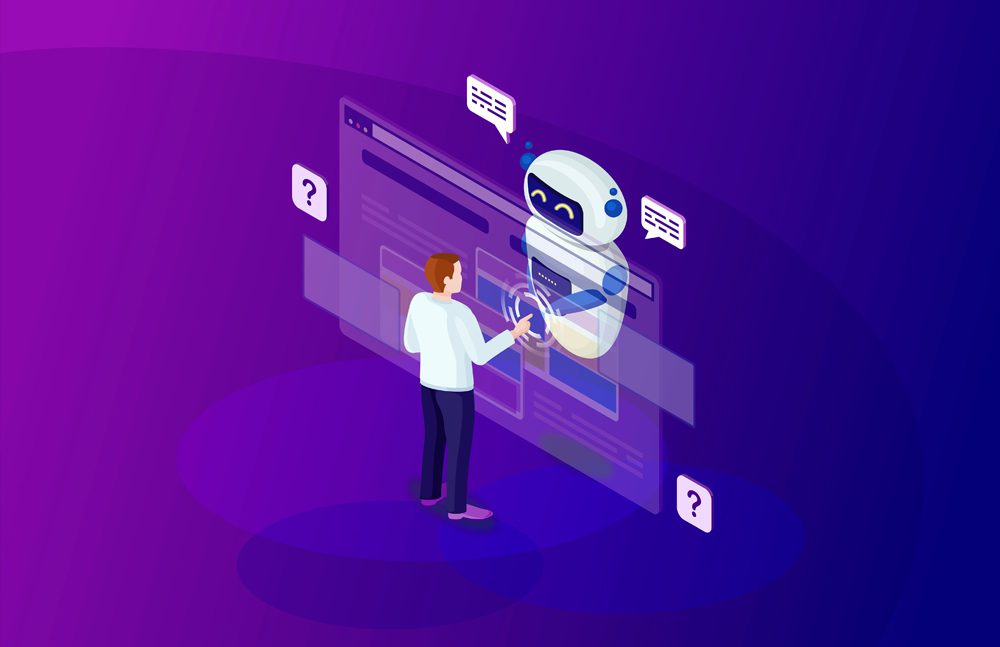
In the modern world of digital marketing, integrating cutting-edge technologies such as artificial intelligence (AI) is changing how companies and their customers interact. Chatbots became a powerful tool, providing immediate responses and improving customer engagement. But, the rising level of trust in chatbots highlights an essential question: how are they different from traditional human agents? This article explores the strengths and weaknesses of chatbots and human agents, as well as tells how to provide the right balance for effective customer service.
Chatbots in Marketing
According to research by Business Insider, the chatbot market is expected to reach $1.25 billion by 2025, growing at an annual rate of 24.3%. This technology is in trend because of its unquestionable benefits:
- Immediate support: chatbots provide real-time responses to customer queries, improving user satisfaction and reducing customer waiting time. Studies show that fast reaction plays a crucial role, with 60% of users appreciating real-time communication with brands.
- Data-Driven Insights: Chatbots can collect valuable data from customer interactions, thus providing information about their behaviors and preferences. Companies can improve their products and services by adapting to the customers’ needs.
- 24/7 Functioning: chatbots are available 24/7 making sure that customers can get help at any time. Such full-time service may increase customer loyalty, as clients appreciate the convenience of having an opportunity to get support outside regular business hours.
- Cost-Effectiveness: businesses can significantly reduce operational costs by automating routine inquiries using chatbots. It allows companies to redirect resources to more complex tasks that require human attention.
Limitations of Chatbots
However, chatbots have limitations that can lower the level of customer satisfaction and the overall effectiveness of marketing campaigns:
Join The European Business Briefing
New subscribers this quarter are entered into a draw to win a Rolex Submariner. Join 40,000+ founders, investors and executives who read EBM every day.
Subscribe- Lack of Emotional Intelligence: Chatbots do not have the emotional intelligence that human agents have, which can lead to mistakes when trying to deal with complex problems
- Limited Problem-Solving Abilities: The problem-solving ability of chatbots depends on the data they have been trained on, so they may not be able to handle unusual queries or situations outside their programming. This points out the importance of companies like Unidata that provide training data services, allowing chatbots to learn from a wide range of scenarios and improve their performance in real-world interactions.
- Potential for Miscommunication: Even with improved natural language processing, chatbots can still misinterpret user intentions, leading to incorrect responses and user dissatisfaction.
The Benefits of Human Agents
Human agents have several invaluable qualities that chatbots don’t:
- Emotional Connection: Human agents can easily create emotional connections with customers. This ability helps to pay attention to even the smallest nuances of the conversation, and sympathize with customers’ problems, thus crafting tailored responses that increase customer satisfaction. According to Forbes, 75% of consumers prefer to address their queries to human agents because of emotional support and individual service.
- Complex Problem-Solving: Being able to imitate conversations, chatbots lack emotional intelligence and problem-solving abilities, which causes dissatisfaction while dealing with complex issues. Moreover, chatbots don’t interpret user intent correctly providing bad responses, but despite these disadvantages, chatbots are still effective in marketing campaigns.
- Brand Representation: Human agents can embody a brand’s voice and values in ways that chatbots cannot. This is crucial for preserving brand integrity, particularly in sectors where trust and relationship-building are extremely important.
Challenges with Human Agents
Despite their advantages, relying solely on human agents also has its downsides:
- Cost: Hiring, training, and retaining human agents is costly, particularly for small businesses. The costs are compounded when considering the need for 24/7 coverage, which often requires shifts and potentially, a larger workforce.
- Limited Availability: Human agents cannot work around the clock without significant investment in staffing. This can lead to delays in response times, especially during peak hours or outside of normal business hours.
- Scalability Issues: As the volume of customer interactions grows, scaling human support teams can be challenging and expensive. Unlike chatbots, human agents can only handle one interaction at a time, which can lead to longer wait times for customers.
Finding the Right Balance
The key to a successful customer service strategy is not choosing between chatbots and human agents, but finding the right balance between them. Here are some strategies to consider:
1.Hybrid Models: AI technologies (like AI chatbots) are more intelligent and can also support human agents in their interactions with customers, creating a more efficient workflow. uman agents in their interactions with customers, creating a more efficient workflow.
Real-Time Assistance: Implement AI tools that provide agents with real-time suggestions and relevant data during interactions. These tools can analyze customer inquiries and recommend the best course of action based on previous interactions or company knowledge bases.
Task Automation: AI can automate routine administrative tasks, such as data entry or follow-up reminders, allowing human agents to focus on providing excellent customer service and solving complex problems.
2.Escalation Protocols: A crucial aspect of integrating chatbots into the customer service process is ensuring a smooth transition between automated systems and human agents.
Easy Transition. Customers should be able to easily address their queries to a human agent. Clear prompts explaining how to contact a human representative should encourage users to seek assistance if chatbots are unable to meet their needs.
Context Preservation. It is essential to preserve the context of a conversation when transferring it from a chatbot to a human agent. Ensuring the human agent has access to the customer’s previous interactions and relevant details will provide a smooth experience and reduce customer frustration
3.Continuous Improvement: Continuous learning is crucial for both chatbots and human agents to stay effective in meeting customer needs as they evolve.
Feedback Loops: Provide users with the opportunity to rate their experience with chatbots and human agents. This feedback can help organizations identify areas for improvement in both chatbot responses and human agent handling of inquiries.
Data Analysis: Analyze the interactions handled by chatbots regularly to identify common queries and knowledge gaps. Use this information to train the chatbots on new data, improving their ability to handle a wider range of questions over time
4.Customer Segmentation: To optimize resource allocation, companies can categorize customer queries based on their complexity and urgency. Simple and frequently asked questions can be handled by chatbots. These include inquiries about business hours, product availability, and basic troubleshooting steps. Complex issues that require more critical thinking, empathy, and nuanced responses should be assigned to human agents. By redirecting straightforward queries to chatbots, companies ensure that human resources are used for interactions that require a higher level of attention and expertise.
5 .Educating Customers About AI and Human Support: Let customers know what they can expect from each and when they should expect human support. Providing clear instructions encourages users to get help without delay. User Empowerment: By educating users about the capabilities of chatbots, they can learn how to optimize their interactions. This makes it easier for users to get quick answers and escalate issues if necessary.
Conclusion
Achieving a balance between chatbots and human agents is essential for developing an effective customer service strategy. By intelligently categorizing inquiries, implementing smooth escalation processes, promoting continuous learning, equipping human agents with AI tools, and informing customers, companies can harness the strengths of both technology and human interaction. This combined approach ensures timely and accurate responses, while also providing the personalized touch that human agents bring. As customer service continues to evolve, businesses that successfully integrate AI and human assistance will be better able to meet diverse customer needs, fostering loyalty and engagement.


