





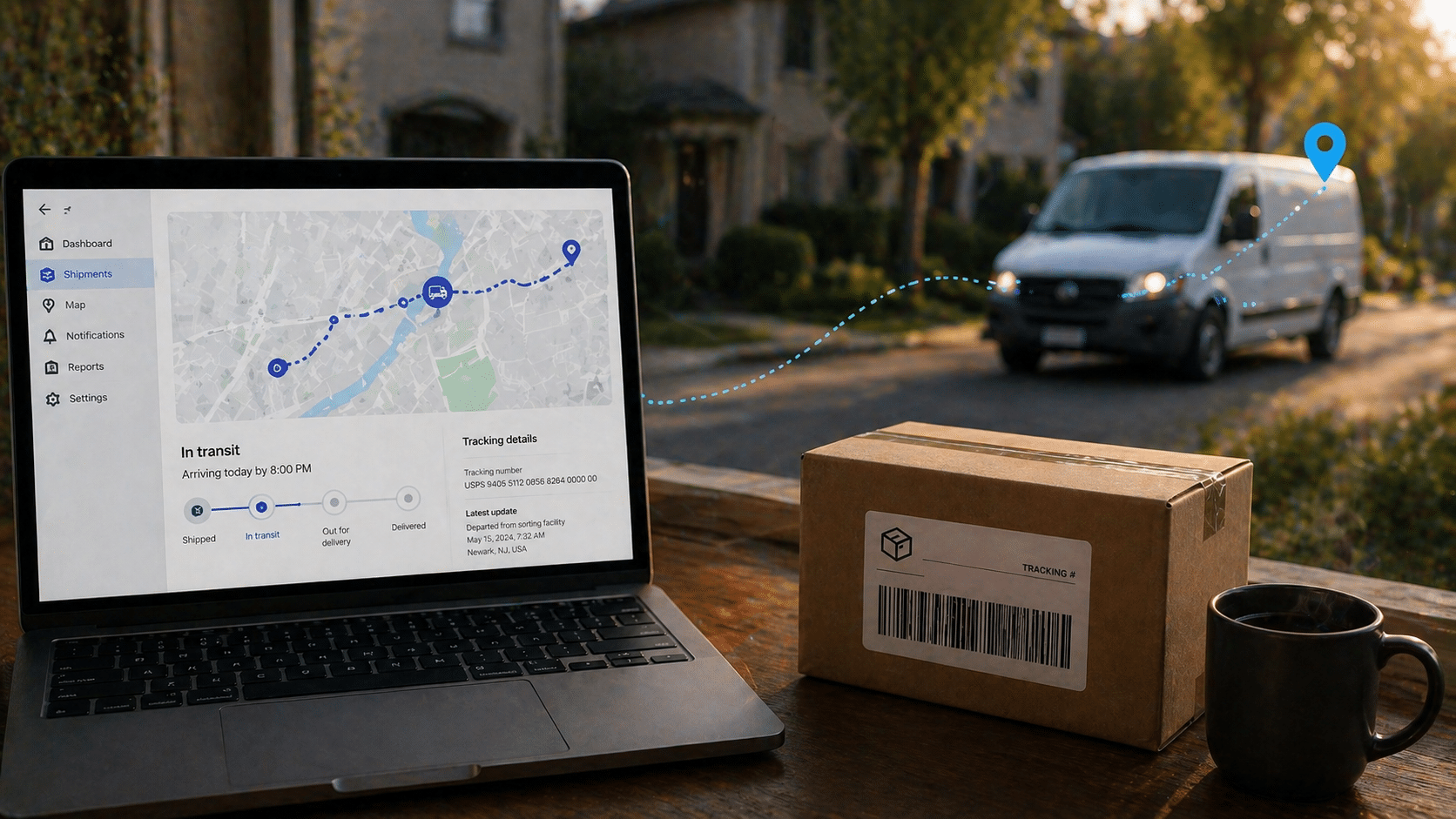
Tracking packages used to mean waiting hours or days for a new scan. Today, shoppers expect to know exactly where their order is at any moment. Some even dream of instant updates that show every step from warehouse to front door. This article explores how close we are to that dream, what technologies make real‑time tracking possible, and why the shipping industry is investing heavily in it. We’ll also discuss real examples, customer expectations and the challenges still ahead.
The evolution of package tracking
Early package tracking was milestone‑based. Carriers posted updates only when a parcel reached a major hub or was scanned at pickup or delivery. A 2026 guide to real‑time supply chain visibility notes that managers often spent days wondering where a shipment was because updates were only recorded at “milestones”. As e‑commerce grew and customers demanded more control, businesses began using digital tools that show live data. Real‑time visibility now means there is no delay between an event happening and a manager or customer seeing it on their screen. This shift allows companies to move from reactive actions—like calling a carrier after a truck is already late—to proactive actions: real‑time systems alert managers immediately if a shipment faces a storm or delay so they can reroute goods or update customers before problems occur.
Several technologies have been key to this evolution. Radio‑frequency identification (RFID) tags allow automatic, non‑line‑of‑sight data capture and continuous visibility, connecting physical objects to digital systems. Internet of Things (IoT) sensors, small devices attached to pallets or parcels, send GPS coordinates every few seconds and monitor temperature, humidity and shock. Artificial intelligence (AI) converts millions of data points into predictions—for example, spotting that a port always slows down on Friday and recommending shipment on Thursday instead. These advances mean real‑time monitoring is no longer science fiction.
Join The European Business Briefing
New subscribers this quarter are entered into a draw to win a Rolex Submariner. Join 40,000+ founders, investors and executives who read EBM every day.
SubscribeTechnologies that enable near‑instant updates
Today’s real‑time tracking is powered by a combination of hardware and software. IoT adoption has accelerated quickly: according to Tive’s 2025 State of Visibility report, the number of companies using IoT devices for shipment tracking increased from 55 % to 60 % in just twelve months, while IoT‑based cargo monitoring grew 200 %. Sensors transmit data over cellular or satellite networks to cloud platforms, where AI algorithms analyse it and provide actionable insights. The supply‑chain technology company Sensos points out that AI, IoT and cellular‑enabled sensors have matured to the point that they can track every shipment in real time without complex infrastructure.
GPS and RFID
Global Positioning System (GPS) devices show a parcel’s location and route on a map. They provide minute‑level updates and are widely used for high‑value goods. RFID tags, which can be read automatically as they pass through readers, now give each item a unique digital identity. A 2026 RFID trends report notes that item‑level RFID will soon be an operational expectation because it enables continuous visibility and eliminates the need for manual scans. The tags can also combine with QR codes or sensors for hybrid identification, offering flexibility in different supply‑chain scenarios.
IoT sensors and digital twins
Unlike basic trackers, IoT sensors gather real‑time data about location and conditions. They monitor temperature, humidity and shock, and send alerts when thresholds are crossed. Today’s advanced tracking systems combine data from multiple sources—weather, traffic, and port congestion—to build a digital twin of the entire supply chain. This digital twin allows managers to see not just where a shipment is now, but how external factors might affect its journey.
Artificial intelligence and predictive analytics
Sensors provide raw data, but AI turns it into actionable insights. Algorithms detect patterns and predict delays, suggesting alternative routes or shipping times. AI also powers Estimated Time of Arrival (ETA) calculations and helps carriers proactively communicate with customers. For example, FedEx handles 17 million packages each day, generating about 2 petabytes of data; executives say this data fuels AI tools that enhance predictability and create better last‑mile experiences.
Real‑world examples of near‑real‑time tracking
Home Depot’s minute‑by‑minute delivery tracker
In March 2026 The Home Depot announced that it would launch an industry‑first real‑time delivery tracker for large building‑materials orders. According to the company, the feature—expected by the end of Q1 2026—will provide minute‑by‑minute updates and show customers exactly where the truck is, including the remaining stops and the items on board. The system is powered by a driver handheld app that transmits real‑time GPS data directly from the truck. Customers receive SMS notifications, can watch the live location on a map, see how many stops remain, and plan their day accordingly. Real‑time tracking is already available for large appliance deliveries and will soon reach mobile lock screens.
UPS and RFID
UPS, another logistics giant, is moving from bar‑code scans to RFID sensing across its U.S. network. A company executive said that RFID will “light up customers’ supply chains in real time,” offering precise tracking and faster insights, and called it the most significant visibility advancement in the past decade. UPS is deploying RFID tags on every package processed through 5,500 UPS Store locations and installing RFID readers in all delivery vehicles and facilities. This infrastructure can automatically read package IDs without manual scanning, giving near‑instant visibility into each parcel’s location.
FedEx and Best Buy partnership
FedEx is also investing in data and tools that anticipate disruptions and provide optimized route information. In September 2025 Best Buy named FedEx its primary national parcel carrier. FedEx executives said the retailer will now provide real‑time tracking data and order communication to improve customer experience. By giving customers more timely and accurate updates, FedEx expects to reduce support calls, cancellations and reship costs. FedEx notes that 29 % of consumers want clarity on exact delivery times and 28 % want real‑time tracking with precise location information, so investing in real‑time visibility is key to staying competitive.
FedEx SenseAware and condition monitoring
For sensitive shipments—such as pharmaceuticals or electronics—FedEx offers SenseAware, a device that provides real‑time information not only about location but also about temperature, pressure and shock. SenseAware sends proactive alerts if something unusual happens. Customers can tailor alerts for specific routes or conditions, making it useful for ensuring product quality during transit.
Why customers demand real‑time visibility
As e‑commerce orders grew to billions of parcels yearly, customers became impatient with vague delivery windows. In 2026, consumers expect full transparency — they want to know exactly where their order is at any moment, not just approximate updates. Real‑time updates reduce support tickets and build trust. In fact, a survey of 25,000 people found that 29 % want exact delivery times and 28 % want precise location information. Other research shows that 64 % of customers consider real‑time tracking essential and 82 % expect proactive updates (notifications when something goes wrong). When businesses meet these expectations, they not only reduce customer support costs but also increase loyalty—Tive notes that a 5 % boost in customer retention can lift profits by 25–95 %.
Challenges to achieving true instant tracking
Despite rapid advances, several hurdles remain before truly “instant” tracking is universal.
- Connectivity gaps: IoT sensors rely on cellular or satellite networks. Remote areas, dense urban canyons and ocean crossings can still cause signal delays. However, 5G networks and low‑earth‑orbit satellites are expanding coverage, reducing latency and enabling more frequent updates.
- Integration and data silos: Real‑time systems must integrate data from multiple carriers, sensors, weather feeds and traffic reports. Breaking down data silos and combining information into one system is essential for turning raw data into clear, useful insights. This requires investment and cooperation across the supply chain.
- Cost and scalability: While tags and sensors are getting cheaper, outfitting every parcel with an IoT device is still costly. Battery‑powered sensors require maintenance, though innovations like battery‑free tags and energy harvesting are reducing costs. Businesses often start with high‑value or temperature‑sensitive shipments and expand later. Subscription models, like those offered for FedEx SenseAware, can make advanced tracking affordable for occasional shipments.
- Privacy and security: More data flowing through networks means greater exposure to cyber threats. Secure encryption and blockchain technology can help ensure that tracking data remains tamper‑proof and confidential.
So, is instant tracking possible?
“Instant” tracking suggests zero lag between a package moving and the update reaching a user. In practice, the reality is near‑real‑time. Modern sensors transmit location and condition every few seconds, and AI processes the data immediately. For most customers, this feels instantaneous: you can watch a delivery truck move down your street on a map and even see how many stops remain. Global supply chains now have the tools to track every shipment without complex infrastructure, and adoption is growing rapidly.
Complete instant tracking may never be possible in the strictest sense—there will always be some latency due to physics, network coverage or power constraints. But the gap between events and visibility has shrunk from days to minutes, and now to seconds. As 5G networks expand, IoT sensors become cheaper and AI models get smarter, the difference between real‑time and “instant” will become indistinguishable to most users.
To see how real‑time tracking works in practice, you can track FedEx delivery online using a dedicated tool that aggregates updates from the carrier. By entering your tracking number once, you receive continuous updates without refreshing multiple websites. As technology matures, instant‑feeling visibility will become standard, giving customers peace of mind and helping businesses run smarter, leaner operations.


