





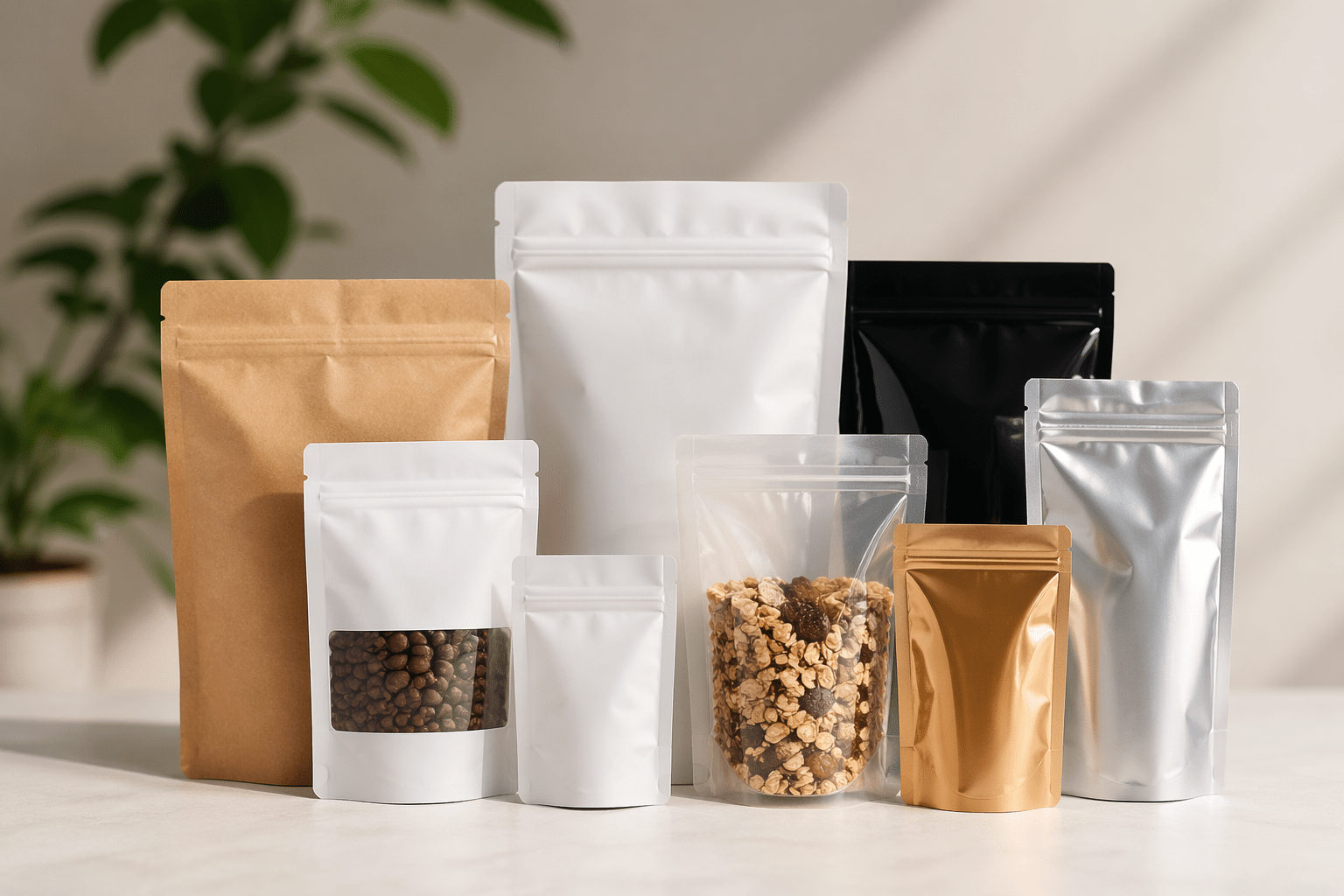
Rising material costs, production delays, and product waste are challenges many manufacturers are dealing with today. In many cases, the problem is not just the product itself, but the packaging used to protect and deliver it. Companies like YZ Pack, the trusted packaging film and flexible packaging manufacturer, have seen how traditional packaging can take up more space, use more material, and slow down production lines.
Flexible packaging offers a more practical approach. By using lighter materials and adaptable designs, it helps reduce costs while improving how efficiently products are packed, stored, and shipped. For manufacturers looking to stay competitive, packaging is no longer just a container. It directly affects cost control and overall operational performance.
What Flexible Packaging Is and Why Manufacturers Use It
Flexible packaging refers to materials that can bend or adapt to the shape of the product. Instead of rigid containers like glass jars or hard plastic boxes, it uses formats such as pouches, roll films, and sachets.
Join The European Business Briefing
New subscribers this quarter are entered into a draw to win a Rolex Submariner. Join 40,000+ founders, investors and executives who read EBM every day.
SubscribeThis shift is happening because these formats are lighter, take up less space, and are easier to handle during production and shipping. Unlike rigid packaging, which often leaves unused space, flexible options are designed to fit the product more closely. As a result, manufacturers across food, consumer goods, and industrial sectors are adopting this approach to simplify operations and reduce unnecessary costs. Many businesses also rely on experienced flexible packaging manufacturers to ensure consistent material quality and reliable production performance.
How Flexible Packaging Cuts Material and Production Costs
One of the most immediate advantages is the reduction in material use. Compared to rigid containers, flexible formats require significantly less raw material while still providing effective protection. This lowers material costs and reduces the overall weight of each unit.
Because the packaging is lighter and more compact, storage and transportation expenses also decrease. More products can fit into the same space, whether in a warehouse or during shipping, improving logistics efficiency. At the same time, the packaging is designed to match the product more closely, reducing empty space and excess material.
For example, a snack manufacturer switching from rigid containers to pouches can ship more units in a single load, lowering freight costs per unit. Over time, these savings add up, directly improving profit margins without affecting product quality.
Flexible Packaging for Better Production Efficiency
Flexible packaging supports smoother and faster production, especially when used with automated systems like vertical and horizontal form-fill-seal (VFFS/HFFS) machines. When the material is properly matched to the equipment, it allows for stable film feeding and consistent sealing performance.
This reduces common issues such as misfeeds, sealing errors, and machine interruptions. With fewer disruptions, production lines can run at higher and more consistent speeds. At the same time, reliable sealing helps maintain product quality across batches.
In practical terms, less downtime and smoother operation lead to higher output. For manufacturers, this means better efficiency, more predictable production, and improved use of existing equipment. This is why experienced manufacturers like YZ Pack focus on ensuring material compatibility with different machine setups.
Minimizing Waste and Product Loss
Flexible packaging also helps reduce waste throughout production and distribution. Because it fits the product more closely, there is less movement inside the package, lowering the risk of damage during handling and transport.
Strong and consistent sealing helps prevent leaks, contamination, and spoilage, especially for food and liquid products. With improved material performance, manufacturers also experience fewer rejected units during quality checks.
The result is less wasted product and packaging, along with more efficient use of resources. This not only reduces costs but also supports better operational performance in a practical, measurable way.
How Flexible Packaging Makes the Supply Chain More Efficient
Across the supply chain, flexible packaging offers clear advantages. Its lightweight and compact nature makes storage and stacking easier, allowing businesses to maximize warehouse space without increasing costs.
The reduced weight and volume also lower shipping expenses. Whether transporting goods locally or internationally, lighter loads help control logistics costs over time. In addition, these formats are easier to handle during loading and transport, which helps reduce delays and handling issues.
As businesses grow, these efficiencies become even more valuable. A streamlined supply chain makes it easier to scale operations without adding unnecessary complexity. Many manufacturers working with partners like YZ Pack benefit from packaging solutions designed with both logistics and production efficiency in mind.
Why Choosing the Right Packaging Partner Matters
Not all flexible packaging performs the same. Material selection, printing quality, and machine compatibility all play a role in how well packaging performs in real production environments. A mismatch can lead to sealing issues, inconsistent output, or frequent machine stoppages.
This is why many businesses choose to work with experienced manufacturers. With the right expertise, packaging can be tailored to both the product and the production setup. Over time, this leads to more reliable operations, fewer disruptions, and better overall efficiency.
A Smarter Approach to Packaging
Packaging is no longer just about containing a product. It is a strategic decision that affects cost, efficiency, and long-term performance. Flexible packaging offers clear benefits, from reducing material and shipping costs to improving production and minimizing waste.
For manufacturers looking to stay competitive, even small improvements in packaging can lead to meaningful gains. As market demands continue to grow, choosing the right packaging approach will play an increasingly important role in maintaining efficiency and supporting long-term growth.


